If your electricity bill has climbed for the third year running and you cannot figure out why, you are not imagining it — and the cause is bigger than seasonal weather. A structural shift is underway in how much electricity the United States consumes, and California homeowners are sitting at the center of it. This post is for SoCal homeowners who want to understand what is happening and what they can realistically do about it.
AI data centers consumed electricity in 2025 at a pace that stunned energy analysts. SoCal utility rates are now among the highest in the country, and the infrastructure cost of wiring all of it together is being distributed to every ratepayer on the grid — including you.
What's actually driving your SoCal bill higher in 2026
U.S. electricity demand was, for almost two decades, essentially flat. According to the Energy Information Administration, consumption barely moved from the mid-2000s through the early 2020s. That flatline ended. The EIA's January 2026 press release projects the strongest four-year stretch of U.S. electricity demand growth since 2000, driven in the agency's own words by "increasing demand from large computing facilities." Data centers now account for approximately 50% of all new U.S. electricity demand growth, according to Fortune citing IEA data — and the IEA projects that share continuing to 2030.
The numbers are stark. Per the IEA's 2026 news release, electricity demand from data centers surged 17% globally in 2025. The AI-specific slice grew even faster — consumption from AI-focused data centers climbed 50% in 2025 alone, well outpacing global electricity demand growth of 3%. The five largest technology companies spent more than $400 billion on capital expenditure in 2025 and are set to increase that by a further 75% in 2026, per IEA's April 2026 "Key Questions on Energy and AI" report.
This is not just a future forecast — it's already in your bill
The electricity demand surge is already translating into rate increases across Southern California. According to the CPUC's September 2025 decision in SCE's General Rate Case, a residential SCE customer using 500 kWh per month saw a 9.1% rate increase in 2025. Then SCE's October 2025 rate adjustment pushed the average residential rate to 35.3 cents per kWh — a 12.9% increase in monthly bills for a typical household. As of January 2026, SCE's average residential rate stands at 34.5 cents per kWh, per SCE's own rate advisory.
And the CPUC has already approved future increases: $544 million in additional base revenue for SCE in 2026, $522 million in 2027, and $447 million in 2028. LADWP rates rose 11–16% year-over-year in mid-2025, per NBC Los Angeles, and the 2026 average now sits at 22.5 cents per kWh — 34% above the national average of 16.8 cents per kWh. SDG&E, already the most expensive utility in the state, added another approximately $4 per month in combined charges effective January 2026. Nationally, per Fortune, power bills have risen 40% since 2021, and utilities requested over $30 billion in rate increases in 2025.
For a deeper breakdown of what each SoCal utility is doing with rates this year, our post on how SoCal utility rates are changing in 2026 covers the mechanics utility by utility. And if you are on SCE's time-of-use plan — or wondering whether you should be — our guide to SCE time-of-use rate plans and solar explains how the rate structure interacts with rooftop generation.
Why data centers are reshaping California's grid
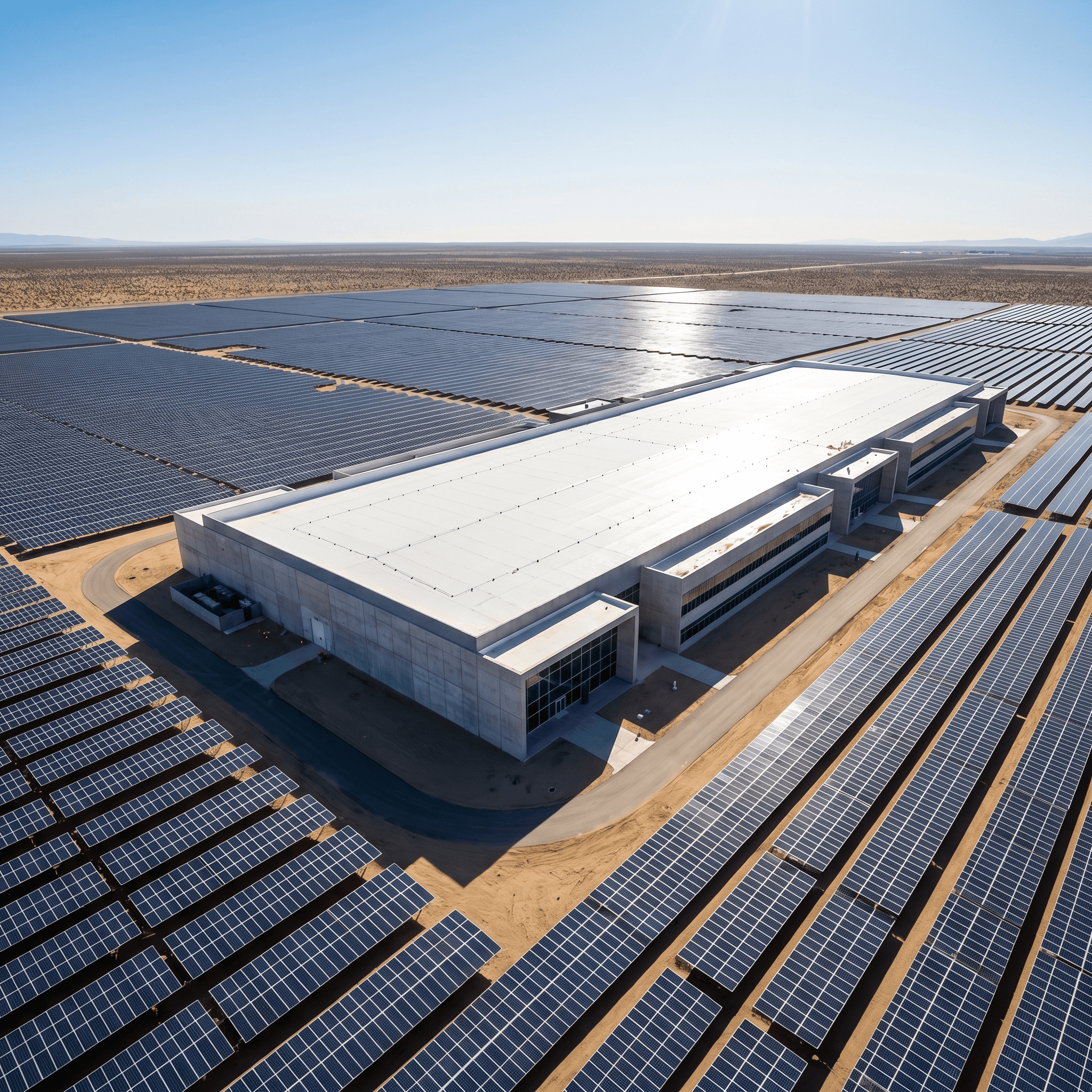
California is not a bystander in the data center buildout. According to CalMatters, reporting on a peer-reviewed environmental analysis in November 2025, California data centers consumed 10.8 TWh of electricity in 2023 — nearly double the 5.5 TWh they used in 2019. The projection is for California data center electricity consumption to reach up to 25 TWh by 2028, equivalent to powering approximately 2.4 million homes. The state has 321 data center sites, the third-most in the nation behind Texas and Virginia, and accounts for 6% of national data center energy use.
"The costs that data centers impose on the electrical grid should be paid by the centers themselves, not by average California families." — Little Hoover Commission Chair Pedro Nava, as quoted by CalMatters, March 2026
That concern is not hypothetical. The CPUC's own Public Advocates Office warned in October 2025 that "the significant costs that utilities incurred to serve these data centers will be passed on to existing ratepayers." Data centers consume 10 to 50 times more electricity per square foot than a typical commercial office building, per the same CPUC commentary. The individual interconnection costs for a new data center range "from several million to over $100 million per project."
The transmission bill is already being written — and you're on it
In May 2025, CAISO approved a cluster of transmission upgrades in the South Bay Area of the LA Basin specifically intended to serve 2.5 gigawatts of concentrated data center and electrification load growth between 2026 and 2039. The cost of those upgrades exceeds $2 billion, per the CPUC Public Advocates Office. Then in April 2026, CAISO released its draft 2025–2026 transmission plan, recommending 38 infrastructure upgrades totaling $7 billion at full buildout over the next decade, driven by "building and transportation electrification, manufacturing expansion, and large loads including data centers."
PG&E (which serves Northern California) has already forecast 10 gigawatts of potential California data center electricity demand over the next decade — four times the generating capacity of Diablo Canyon nuclear plant, per Little Hoover Commission Chair Pedro Nava's March 2026 remarks to CalMatters. Mark Toney of The Utility Reform Network put it plainly: "Data center growth has as much potential to increase electricity rates as it does to decrease rates if not done properly."
From where we sit — working with homeowners across LA, Orange, and Ventura counties — the trend is already visible. Rate cases are approved, transmission upgrades are funded, and the load is projected to keep climbing. Whether data center operators ultimately bear a larger share of those costs through policy change is an open question. Whether your bill is higher today than it was three years ago is not. Our comparison of LADWP vs. SCE for solar in Los Angeles covers how the two largest SoCal utilities differ on solar economics.
What it costs you — and how rooftop solar changes the equation
When a utility's average residential rate is 34.5 cents per kWh (SCE, January 2026) and approved rate increases are already locked in through 2028, every kilowatt-hour you generate at home is a kilowatt-hour you do not buy from the grid. That is the economic case for rooftop solar in 2026 — not export credits, not a tax rebate, but straightforward rate hedging. The electricity you make on your roof has a built-in value that rises every time the CPUC approves another rate case.
A few things to understand about the current landscape before you run the numbers:
NEM 3.0 changed the export math:
Solar-only payback stretched under NEM 3.0. The California Net Billing Tariff, which took effect for SCE, PG&E, and SDG&E customers in 2023, significantly reduced the compensation for electricity exported back to the grid. Industry analysis from solar marketplace Solar.com estimates solar-only payback at roughly 8–10 years under NEM 3.0 — a meaningful increase from the pre-2023 era. In March 2026, the California 1st District Court of Appeal upheld NEM 3.0, affirming the current framework is here to stay per PV Magazine's reporting on the ruling.
Solar paired with battery storage recovers much of that math. By storing the midday solar surplus and consuming it during peak TOU hours (when SCE rates are highest), a solar-plus-battery system maximizes self-consumption and minimizes grid dependence. Industry analysts estimate solar and battery systems can offset 70–90% of a household electricity bill, with payback in the 5–7 year range for cash purchases. We use more conservative figures in our own customer consultations and base them on actual usage data from each home.
The federal residential ITC expired December 31, 2025. H.R. 1 (the "One Big Beautiful Bill," signed July 4, 2025) eliminated the 30% Residential Clean Energy Credit for customer-owned systems after that date, per Enphase's published analysis of the legislation. If you have questions about any federal tax treatment that may apply to your specific installation type or financing structure, consult a qualified tax professional before making decisions based on federal credits.
The self-consumption hedge: what it looks like in practice
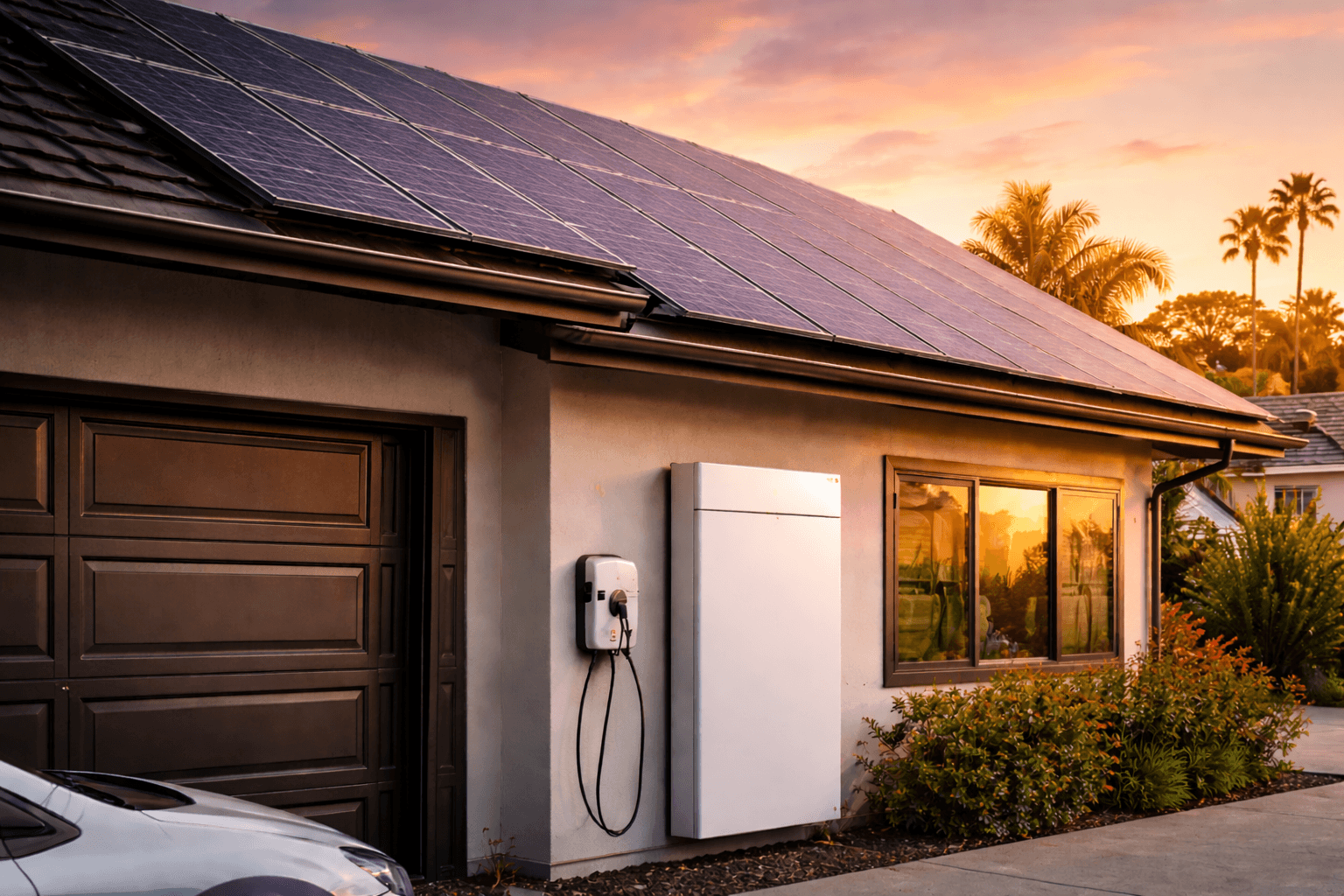
At SCE's current average rate of 34.5 cents per kWh, a household using 700 kWh per month spends roughly $242 on electricity — before the next round of approved increases hits. A rooftop solar system sized to that load in Los Angeles offsets a significant portion of that draw. Add a home battery — an Enphase IQ Battery or Franklin WH system — and you shift consumption away from peak TOU hours when SCE's rates are highest, compounding the savings every month. Under the rate trajectory approved through 2028, that compounding is baked in.
Pairing solar with battery storage gives you a fixed generation asset on your own roof — insulated from whatever the next rate case brings. None of this depends on a new incentive program or a political forecast. The rate increases are already approved.
What this means for you
The AI buildout is not slowing down. Data center electricity demand is on track to double to 950 TWh globally by 2030, per the IEA. California has 321 data center sites and a grid operator planning $7 billion in transmission upgrades to keep up. CAISO has approved the South Bay cluster. The CPUC has approved SCE's rate increases through 2028. The court upheld NEM 3.0. The structural pressure on your electricity bill is not going away.
"Data center growth has as much potential to increase electricity rates as it does to decrease rates if not done properly." — Mark Toney, The Utility Reform Network (TURN), via CalMatters, March 2026
Homeowners across Los Angeles, Orange County, and Ventura County are asking us whether solar still makes sense in 2026. Our answer: yes — particularly when storage is part of the system. The economics are rate-hedge economics now, not tax-credit economics. That is a more durable case than it might sound, and it gets stronger every time the CPUC signs off on another rate increase.
If you are watching your SoCal electricity bill and want to know what a solar and battery system would actually return for your home, we can run those numbers with you. Schedule a free solar consultation with Anca Solar — we serve homes across LA, Orange, and Ventura Counties and bring 25+ years of installation experience to every project. Learn more about our team before you commit to anything. (CSLB License #873768.)
Subscribe to our newsletter
Sign up to get the most recent blog articles in your email every week.