Southern California Utility Rates Reach Record Highs in 2026: How Solar and Battery Storage Can Cut Bills by 70%
LOS ANGELES, CA — March 17, 2026 — As Southern California utility customers face another round of rate increases in Q1 2026, ANCA Solar is releasing a comprehensive analysis of current electricity costs and demonstrating how properly designed solar-plus-battery systems can reduce monthly energy bills by up to 70%.
The 2026 Rate Landscape: A Utility-by-Utility Breakdown
Southern California Edison (SCE)
SCE's January 2026 rate adjustment brought the average residential rate to 34.5 cents per kilowatt-hour. While this represents a slight decrease from 35.3¢/kWh, the reduction is misleading — it's largely attributable to a $151 million credit from the extended operations at the Diablo Canyon Power Plant.
Meanwhile, SCE has implemented a new Base Services Charge averaging $24.15 per month. This fixed fee is charged regardless of how much electricity a customer uses — or how much solar energy they produce. It cannot be offset by solar panels.
For a typical household using 500 kWh per month:
Standard monthly bill: $187.56
CARE-eligible monthly bill: $112.40
Base Services Charge (fixed): $24.15
San Diego Gas & Electric (SDG&E)
SDG&E continues to charge the highest electricity rates in California — exceeding two and a half times the national average. In early 2026, typical monthly bills climbed to just under $200, driven by a 10% increase in "bundled" rates.
The primary cost driver is the "commodity" charge — the actual cost of purchasing wholesale electricity — which is passed through to customers with no markup. Combined with a newly restructured base services charge implemented in October 2025, San Diego residents face the most expensive electricity in the continental United States.
Los Angeles Department of Water and Power (LADWP)
LADWP's residential rates for January through March 2026 increased by approximately 2.475 cents per kilowatt-hour compared to 2025:
Tier 1 (Standard R-1A): 24.8¢/kWh
Tier 2 (130% of base): 30.6¢/kWh
Time-of-Use High Peak (1-5pm): 27.6¢/kWh
LADWP's unique Power Access Charge creates a "ratchet" effect: a single month of high usage (such as running air conditioning during a heat wave) can lock in a higher fixed monthly charge for the next 12 months — up to $22.70/month for high-usage households.
Why Fixed Charges Change the Solar Equation
The introduction of fixed Base Services Charges across all three major utilities marks a fundamental shift in how Southern California residents pay for electricity. These charges:
Cannot be offset by solar generation — even a home producing 100% of its electricity still pays the fixed charge
Stabilize utility revenue while theoretically lowering per-kWh rates
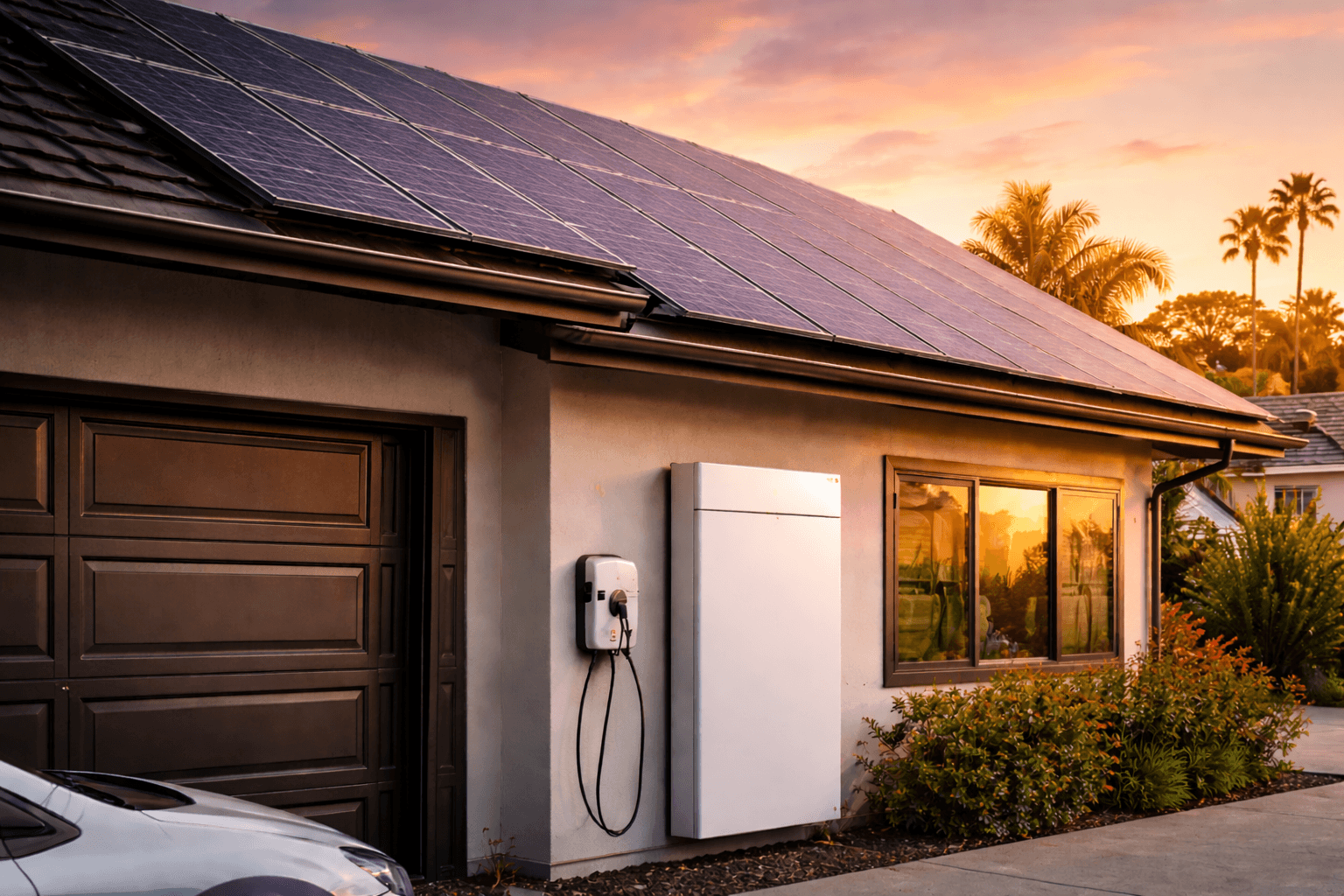
Make battery storage essential — the only way to minimize the total bill is to reduce peak demand and avoid the highest TOU rate windows
"Fixed charges are the utility industry's response to rooftop solar. They're saying: 'We need this revenue regardless of how much solar you install.' The good news is that a well-designed battery system can still dramatically reduce your total bill through time-of-use arbitrage — charging during cheap solar hours and discharging during expensive evening peaks."
— Carlos Vega, Founder of ANCA Solar (CSLB License #873768)
The Battery Advantage: Time-of-Use Arbitrage
Under time-of-use rate structures, electricity costs vary dramatically throughout the day. A battery system allows homeowners to:
Store excess solar energy during midday when generation peaks and export credits are lowest
Discharge stored energy during evening peak hours (typically 4-9 PM) when rates are highest
Avoid peak demand charges that trigger higher fixed monthly fees (especially under LADWP's ratchet system)
Maintain power during outages — a growing concern as grid reliability faces pressure from data center demand and extreme weather
For a typical SCE customer, shifting energy consumption from peak ($0.45-0.55/kWh) to off-peak ($0.20-0.25/kWh) windows through battery storage can reduce the variable portion of their bill by 50% or more.
Grid Reliability: Another Reason to Go Solar + Battery
The California grid enters summer 2026 facing serious challenges:
Data center electricity demand has reached 30,000 MW nationally — an 80% increase from 2024
Winter Storm Fern in January 2026 set records for electricity demand
The CPUC extended its Flex Alert campaign with a $15 million budget, signaling continued concern about peak demand
Aging transmission infrastructure built in the 1950s and 1960s is being pushed beyond design limits
For battery-equipped homes, grid stress events represent an opportunity. Virtual Power Plant (VPP) programs pay homeowners to discharge their batteries into the grid during critical demand periods, turning a residential home into a revenue-generating micro-utility.
About ANCA Solar
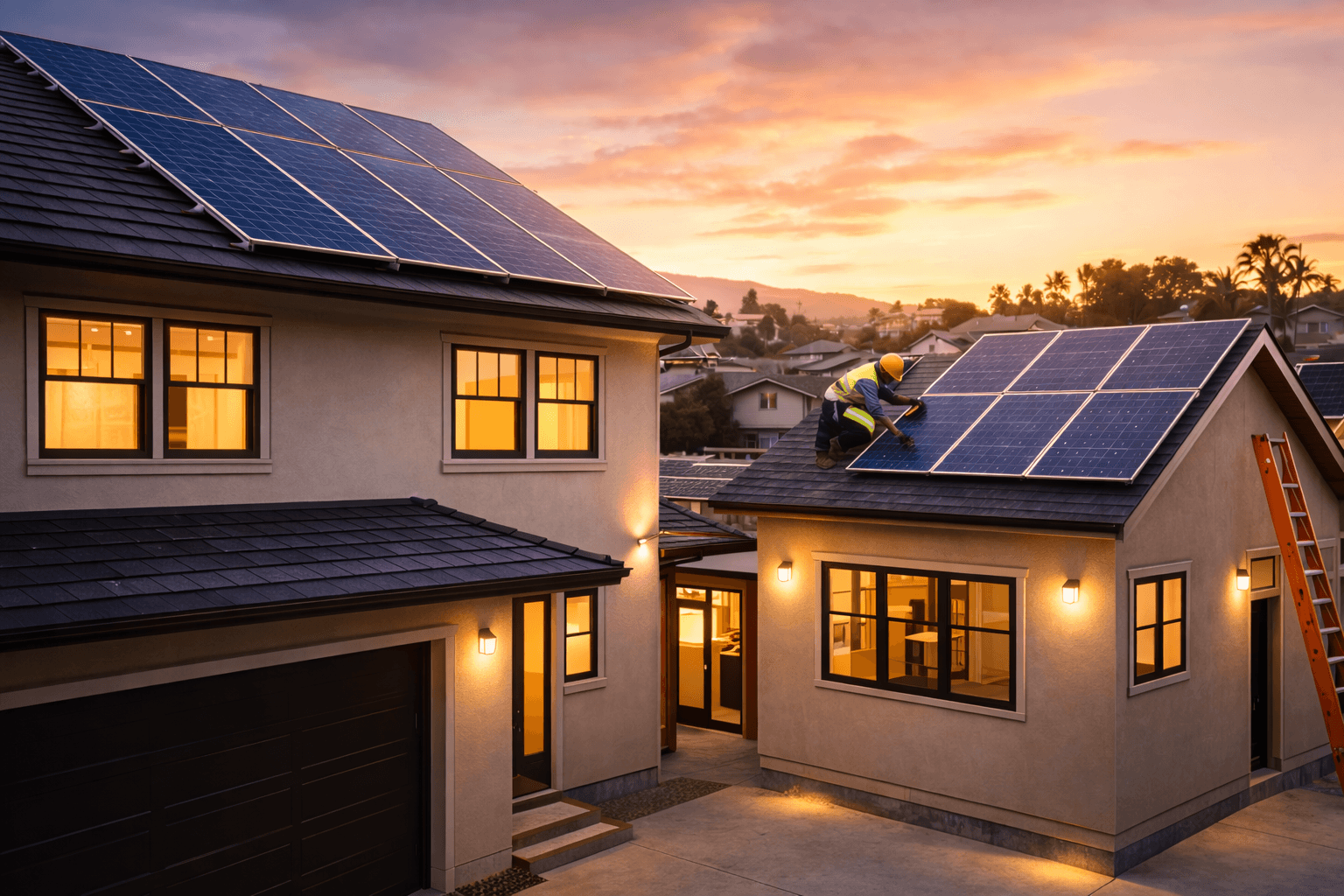
Founded in 2000 by Carlos Vega, ANCA Solar is a licensed and insured solar installation company (CSLB License #873768) serving residential and commercial customers across Los Angeles, Orange, and Ventura Counties. With over 25 years of experience, ANCA Solar specializes in solar panel installation, battery energy storage systems, and comprehensive energy solutions designed to maximize savings and energy independence.
For a free bill analysis and solar consultation, visit www.ancasolar.com or call (805) 410-0494.
Media Contact:
ANCA Solar
Los Angeles, California
Website: www.ancasolar.com
Phone: (805) 410-0494
Subscribe to our newsletter
Sign up to get the most recent blog articles in your email every week.