
LADWP vs SCE: How Your Utility Affects Solar Savings
If you live in Los Angeles County, one of the first questions to answer before going solar is: which utility serves your home? The two major utilities — LADWP (Los Angeles Department of Water and Power) and SCE (Southern California Edison) — have very different rate structures, net metering policies, and incentive programs that directly impact your solar savings.
At Anca Solar, we've installed systems for both LADWP and SCE customers since 2000. Here's how the two utilities compare for solar homeowners in 2026.
Service Area: Which Utility Do You Have?
LADWP serves the City of Los Angeles proper — including neighborhoods like Hollywood, the Westside, San Fernando Valley, South LA, and Downtown. If your city council representative sits on the LA City Council, you're likely an LADWP customer.
SCE serves most of the rest of Los Angeles County, including cities like Long Beach, Santa Clarita, Pomona, Whittier, and unincorporated areas. SCE also serves all of Orange County and Ventura County.
A few cities have their own municipal utilities: Pasadena has PWP, Glendale has GWP, and Burbank has BWP. These operate independently with their own solar programs.
Electricity Rates Comparison
LADWP Rates (2026)
LADWP uses a tiered rate structure that charges more as your usage increases:
Tier 1 (baseline): ~$0.11/kWh
Tier 2 (101–200% of baseline): ~$0.15/kWh
Tier 3 (over 200%): ~$0.19/kWh
LADWP rates are significantly lower than SCE, which is why LADWP customers sometimes see longer solar payback periods. However, LADWP has been raising rates steadily — a 5–7% annual increase is projected through 2028.
SCE Rates (2026)
SCE uses time-of-use (TOU) rates that vary by time of day:
Off-peak (midnight–4 PM, weekdays): ~$0.30/kWh
Peak (4–9 PM, weekdays): ~$0.55/kWh
Super off-peak (weekends, certain hours): ~$0.25/kWh
SCE rates are among the highest in the nation. The wide gap between off-peak and peak rates — nearly double — creates a strong incentive for battery storage.
Net Metering: The Biggest Difference
LADWP Net Metering
This is where LADWP shines for solar customers. LADWP still offers true 1:1 net metering, meaning every kilowatt-hour you send to the grid earns a full retail-rate credit on your bill. This is essentially the old-style net metering that SCE phased out.
With LADWP's net metering:
Excess solar production in summer offsets winter bills
Credits roll over month to month
Annual true-up settles any remaining balance
No time-of-use complications
This makes solar on LADWP simpler and more predictable than on SCE, even though the per-kWh savings are smaller due to lower rates.
SCE Net Billing (NEM 3.0)
SCE transitioned to the Net Billing Tariff (NEM 3.0) in April 2023. Under this system:
Solar exports are credited at the Avoided Cost Rate, which averages $0.04–$0.08/kWh
Credits vary by month and time of day
The gap between what you pay to buy power (~$0.30–$0.55) and what you're paid for exports (~$0.05) is massive
Battery storage becomes essential to maximize ROI
For SCE customers, the math is clear: every kWh you can store and use yourself instead of exporting saves you 5–10x more than sending it to the grid.
Battery Storage: Essential for SCE, Optional for LADWP
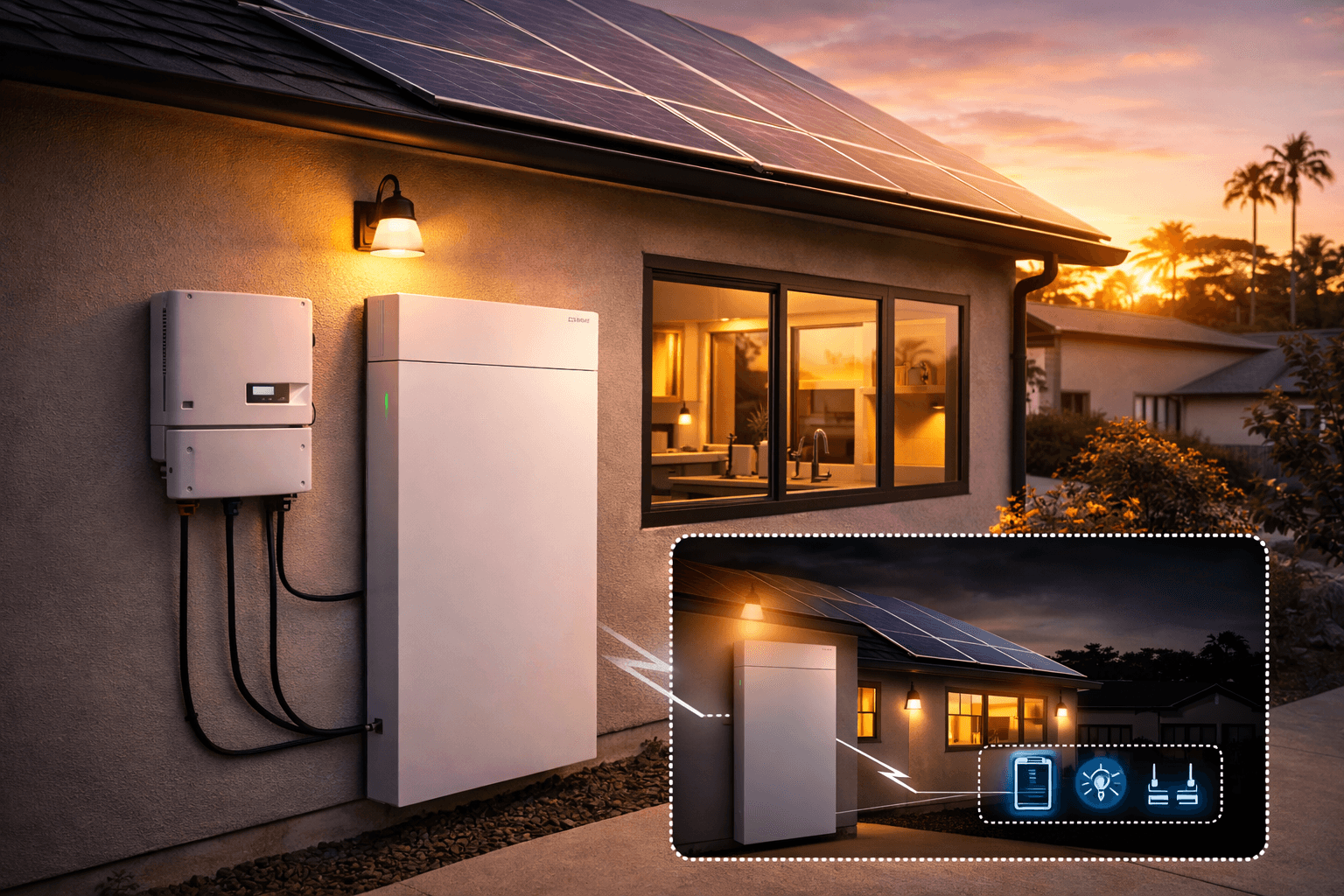
Under NEM 3.0, SCE customers should strongly consider adding battery storage to their solar system. A battery like the Franklin WH or Enphase IQ Battery lets you:
Store cheap midday solar production
Use stored energy during expensive 4–9 PM peak hours
Avoid exporting at low avoided-cost rates
Maintain backup power during outages and PSPS events
For LADWP customers, batteries are still valuable for backup power but less critical for financial returns, since net metering already provides full-value credits for exports.
Solar Incentives by Utility
LADWP Solar Incentive Program (SIP)
LADWP offers its own solar rebate — one of the few utilities in California that still does. The current incentive is approximately $0.25–$0.35/watt for residential systems, which translates to $1,500–$2,800 for a typical 6–8 kW system. Note: the federal residential clean energy credit (30% ITC) expired December 31, 2025 under H.R. 1, so it is no longer available for new customer-owned 2026 installations; consult a tax professional regarding current credits.
LADWP also offers a battery incentive that complements the state SGIP program.
SCE Incentives
SCE doesn't offer direct solar rebates, but SCE customers can access:
SGIP battery rebate: $200–$1,000/kWh for battery storage
Federal ITC: expired Dec 31, 2025 under H.R. 1 — not available for new 2026 customer-owned installations (consult a tax professional)
CARE/FERA discount: Income-qualifying customers get additional SGIP tiers
Payback Period Comparison
LADWP customers: Typical payback of 8–11 years for solar-only systems. Lower rates mean smaller per-kWh savings, but 1:1 net metering and the SIP rebate help offset this. Adding a battery extends payback by 2–3 years but provides backup power.
SCE customers: Typical payback of 5–7 years for solar+battery systems. High rates mean huge savings per kWh. Without a battery, payback can stretch to 9–12 years under NEM 3.0 because export credits are so low.
Municipal Utilities: Pasadena, Glendale, Burbank
If you're in one of LA County's cities with a municipal utility, your solar experience will be different:
Pasadena Water & Power (PWP): Offers net metering and a small solar rebate. Rates are moderate — between LADWP and SCE levels. Learn more about solar in Pasadena.
Glendale Water & Power (GWP): Has a solar feed-in tariff program. Rates are competitive. Learn more about solar in Glendale.
Burbank Water & Power (BWP): Offers net metering with tiered rates. Learn more about solar in Burbank.
Each municipal utility has its own interconnection process and timelines, so working with an experienced local installer who knows these systems is important.
Which Utility Is Better for Solar?
The bottom line:
SCE customers save more money overall because rates are much higher — but they need battery storage to maximize those savings under NEM 3.0
LADWP customers get simpler, more predictable solar economics with 1:1 net metering and a direct rebate — but lower rates mean smaller total savings
Both utilities make solar financially worthwhile in Los Angeles, even without the federal residential ITC (which expired Dec 31, 2025 under H.R. 1)
No matter which utility you have, the best first step is a free solar consultation to model your specific savings. At Anca Solar, we design systems optimized for your utility's rate structure, whether that's LADWP, SCE, or a municipal provider. We've served Los Angeles County, Orange County, and Ventura County since 2000 (CSLB #873768).
Get your free quote today and find out exactly how much you can save.
Subscribe to our newsletter
Sign up to get the most recent blog articles in your email every week.