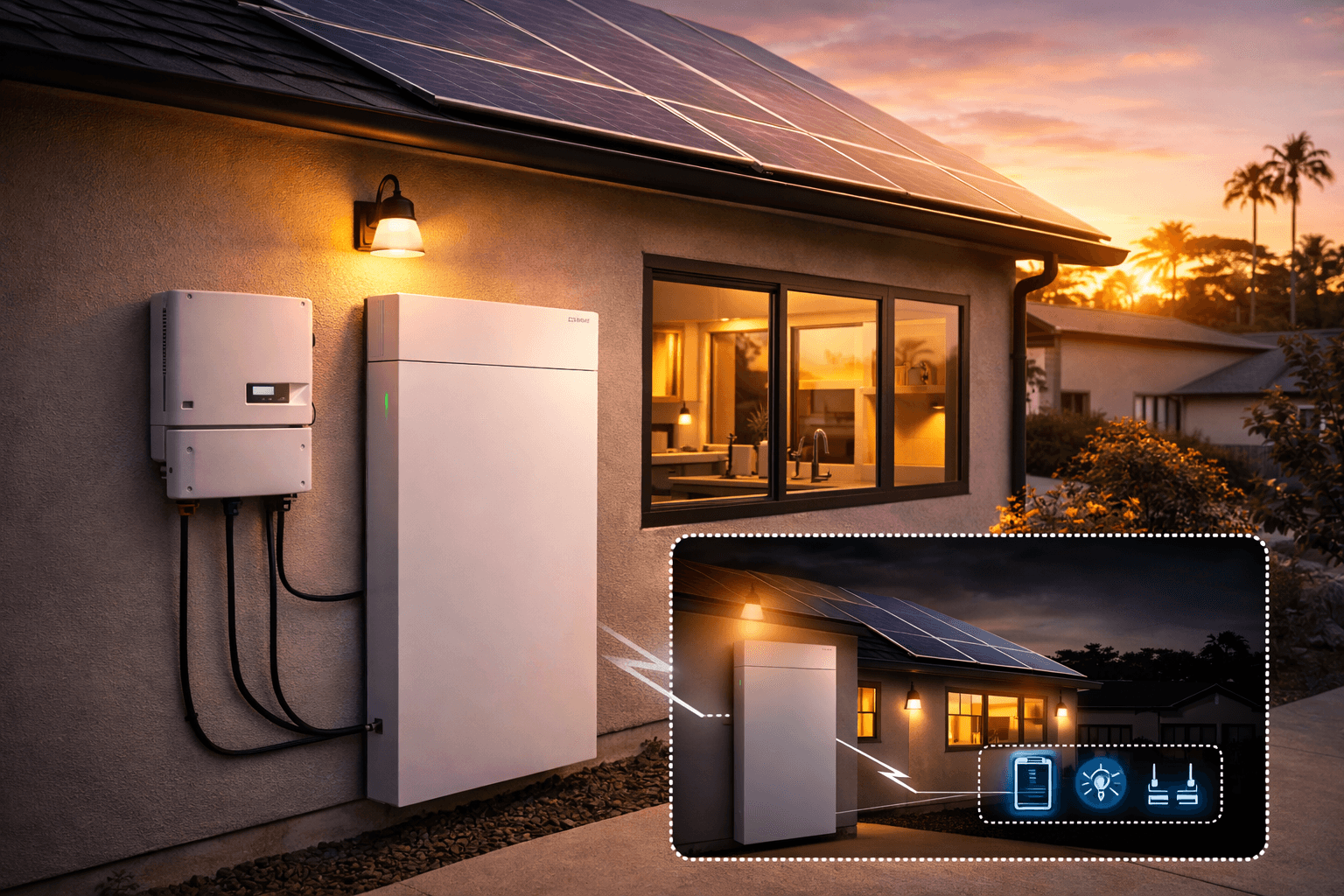

The 30% Federal Solar Tax Credit Is Still Available in 2026
The federal solar Investment Tax Credit (ITC) remains one of the most valuable incentives for homeowners going solar. Under the Inflation Reduction Act of 2022, the ITC is locked at 30% through 2032, giving Southern California homeowners plenty of time to take advantage of this significant tax benefit.
At Anca Solar, we help homeowners across Los Angeles, Orange, and Ventura Counties navigate solar incentives every day. Here's everything you need to know about the solar tax credit in 2026.
How Much Is the Solar Tax Credit Worth?
The ITC equals 30% of your total solar installation cost, including equipment, labor, permitting, and any battery storage installed at the same time. Here's what that means in real dollars:
6 kW system ($18,000): $5,400 tax credit
8 kW system ($24,000): $7,200 tax credit
10 kW system ($30,000): $9,000 tax credit
8 kW solar + 13.5 kWh battery ($36,000): $10,800 tax credit
There is no cap on the dollar amount. Whether your system costs $15,000 or $50,000, you get 30%.
What Expenses Qualify for the ITC?
The ITC covers your total installed cost, which includes:
Solar panels and mounting hardware
Inverters (string inverters or microinverters)
Battery storage systems — Tesla Powerwall, Enphase IQ Battery, Franklin WH, etc.
Electrical work — wiring, conduit, main panel upgrades
Installation labor
Permitting fees and inspection costs
Sales tax on equipment (where applicable)
Monitoring systems if included in the installation contract
The credit does not cover roof repairs or replacement, tree removal for better sun exposure, or landscaping changes.
How the Solar Tax Credit Works
It's a Tax Credit, Not a Deduction
This is important: a tax credit reduces your tax bill dollar-for-dollar. It's much more valuable than a tax deduction, which only reduces your taxable income.
Example: If you owe $10,000 in federal income taxes and have a $7,200 solar tax credit, you only pay $2,800 in taxes. The credit directly reduces what you owe.
No Income Limits
Unlike some state and local incentives, the federal solar ITC has no income limits. Whether you earn $50,000 or $500,000 per year, you qualify for the full 30% credit.
Carry Forward Unused Credits
If your tax credit is larger than your tax liability in the year you install solar, you can carry the remaining credit forward to future tax years. There's no time limit on how long you can carry it forward.
Example: You install a $30,000 system (credit: $9,000) but only owe $6,000 in federal taxes for 2026. You claim $6,000 this year and carry the remaining $3,000 to your 2027 taxes.
How to Claim the Solar Tax Credit
Step 1: Install Your System
The system must be installed and operational by December 31 of the tax year you want to claim the credit. At Anca Solar, a typical solar installation takes 6–12 weeks from contract to activation in Southern California, so plan accordingly.
Step 2: Get Your Documentation
Your solar installer should provide:
Final invoice showing total installed cost
Proof of installation completion
System specifications and equipment list
Interconnection agreement with your utility
Step 3: File IRS Form 5695
When filing your federal tax return, complete IRS Form 5695 (Residential Energy Credits). The credit amount transfers to your Form 1040. Most tax software (TurboTax, H&R Block) guides you through this automatically.
Step 4: Keep Records
Retain all solar-related documents for at least 3 years after claiming the credit, in case of an IRS audit. Keep copies of contracts, invoices, permits, and your interconnection agreement.
Solar Tax Credit Timeline: 2026-2035
The Inflation Reduction Act established this schedule:
2022–2032: 30% tax credit
2033: 26% tax credit
2034: 22% tax credit
2035: Program expires for residential installations
While the 30% rate is available through 2032, there's no advantage to waiting. Solar equipment prices have stabilized, electricity rates keep rising (SCE alone raised rates 15%+ in 2025), and the sooner you install, the sooner you start saving.
Combining Federal and California Incentives
The federal ITC stacks with several California and local incentives:
SGIP Battery Rebate
The Self-Generation Incentive Program provides $200–$1,000/kWh for battery storage. SGIP rebates are not taxable income and don't reduce your ITC — you get both in full.
LADWP Solar Incentive Program
If you're an LADWP customer in the City of Los Angeles, LADWP offers its own solar rebate of approximately $0.25–$0.35/watt. This incentive does reduce the amount eligible for the federal ITC (since it reduces your out-of-pocket cost).
Property Tax Exemption
California exempts solar installations from property tax reassessment through 2025 (often extended). This means your home value increases without higher property taxes.
NEM Credits
Net metering/net billing credits from your utility are not relevant to the tax credit — they're separate ongoing savings from your solar production.
Common Solar Tax Credit Questions
Can I Claim the Credit If I Finance My System?
Yes. Whether you pay cash or take a solar loan, you claim the credit on the full system cost (not just what you've paid so far). If you finance $24,000, your credit is still $7,200. However, solar leases and PPAs do not qualify because you don't own the system.
What If I Already Claimed the Credit for a Previous System?
You can claim the ITC multiple times. If you installed solar in 2020 and add battery storage in 2026, the battery qualifies for a new 30% credit on its installed cost.
Do Batteries Qualify on Their Own?
Yes, starting with the Inflation Reduction Act. Standalone battery systems installed in 2023 or later qualify for the 30% ITC even without solar panels. This is a significant change from prior law.
What About Rental Properties?
The residential ITC (Section 25D) applies to your primary residence and second home. For rental properties, you'd use the commercial ITC (Section 48), which has different rules. Consult a tax professional for rental property installations.
Tax Credit Example: Typical LA County Homeowner
Let's walk through a realistic scenario for a homeowner in Pasadena:
System: 8.4 kW solar + 13.5 kWh Tesla Powerwall
Total installed cost: $35,000
Federal ITC (30%): -$10,500
SGIP battery rebate: -$2,700
Net cost: $21,800
The homeowner's PWP electric bill was $180/month ($2,160/year). With solar+battery, the bill drops to ~$15/month. Annual savings: ~$1,980.
Simple payback: $21,800 ÷ $1,980 = 11 years
25-year savings: ~$49,500 (with 4% annual rate increases) minus $21,800 net cost = $27,700 net profit
Don't Leave Money on the Table
The 30% federal solar tax credit is the most valuable solar incentive available, and it's guaranteed through 2032. Combined with California's SGIP battery rebate and local utility incentives, Southern California homeowners can offset 40–60% of their total solar+battery investment.
At Anca Solar, our free solar consultations include a detailed incentive analysis showing exactly how the tax credit and other programs reduce your cost. We serve Los Angeles, Orange, and Ventura Counties. CSLB License #873768.
Note: This article is for informational purposes only and does not constitute tax advice. Consult a qualified tax professional for guidance on your specific situation.
Subscribe to our newsletter
Sign up to get the most recent blog articles in your email every week.