Solar Installation Timeline in Los Angeles: What to Expect
One of the most common questions we hear at Anca Solar is: "How long will this take?" The honest answer for Los Angeles County installations in 2026: 6 to 12 weeks from signed contract to your system producing power. The actual installation on your roof takes only 1–2 days — the rest is permitting, engineering, and utility coordination.
Here's a detailed breakdown of each phase so you know exactly what to expect.
Phase 1: Consultation and Design (Days 1–7)
After your initial free consultation, your installer creates a custom system design. This includes:
Site assessment: Roof measurements, shading analysis (using satellite imagery and on-site inspection), electrical panel evaluation
System sizing: Matching panel count to your electricity usage, roof space, and budget
Equipment selection: Panel brand, inverter type, battery if included
Proposal and contract: Detailed quote with equipment specs, production estimates, savings projections, and financing options
Timeline: 3–7 days from consultation to signed contract. Some homeowners take longer to evaluate proposals from multiple companies — that's fine, just know it adds to your total timeline.
Phase 2: Engineering and Plan Set (Weeks 1–2)
Once you sign the contract, your installer's engineering team creates a detailed plan set for permitting. This includes:
Structural calculations confirming your roof can support the panels
Electrical single-line diagram showing how the system connects to your panel
Site plan with panel layout and equipment placement
Equipment spec sheets and data sheets
Timeline: 5–10 business days. This is internal work that doesn't require anything from you.
Phase 3: Permitting (Weeks 2–6)
This is typically the longest phase and the one most outside your installer's control. LA County permitting timelines vary significantly by jurisdiction:
City of Los Angeles (LADBS): Los Angeles has implemented an online solar permit portal that has accelerated approvals. Simple residential systems can be approved in 3–5 business days through the express permit process. More complex systems (battery additions, main panel upgrades) may take 2–3 weeks.
Pasadena: Typically 1–2 weeks for standard residential systems. Pasadena's building department is relatively efficient.
Glendale: Usually 2–3 weeks. Glendale requires both building and electrical permits.
Santa Monica: 1–2 weeks for standard systems. Santa Monica is generally solar-friendly with streamlined processes.
Unincorporated LA County: Varies widely, typically 2–4 weeks.
Other cities: Burbank, Long Beach, Beverly Hills, and Santa Clarita each have their own timelines, generally 1–3 weeks.
For Orange County and Ventura County cities, expect similar 1–3 week permitting timelines.
HOA review (if applicable): Add 2–6 weeks if you need HOA architectural approval. California law (AB 2188) requires HOAs to respond within 45 days, but most respond faster.
Phase 4: Installation Day (1–2 Days)
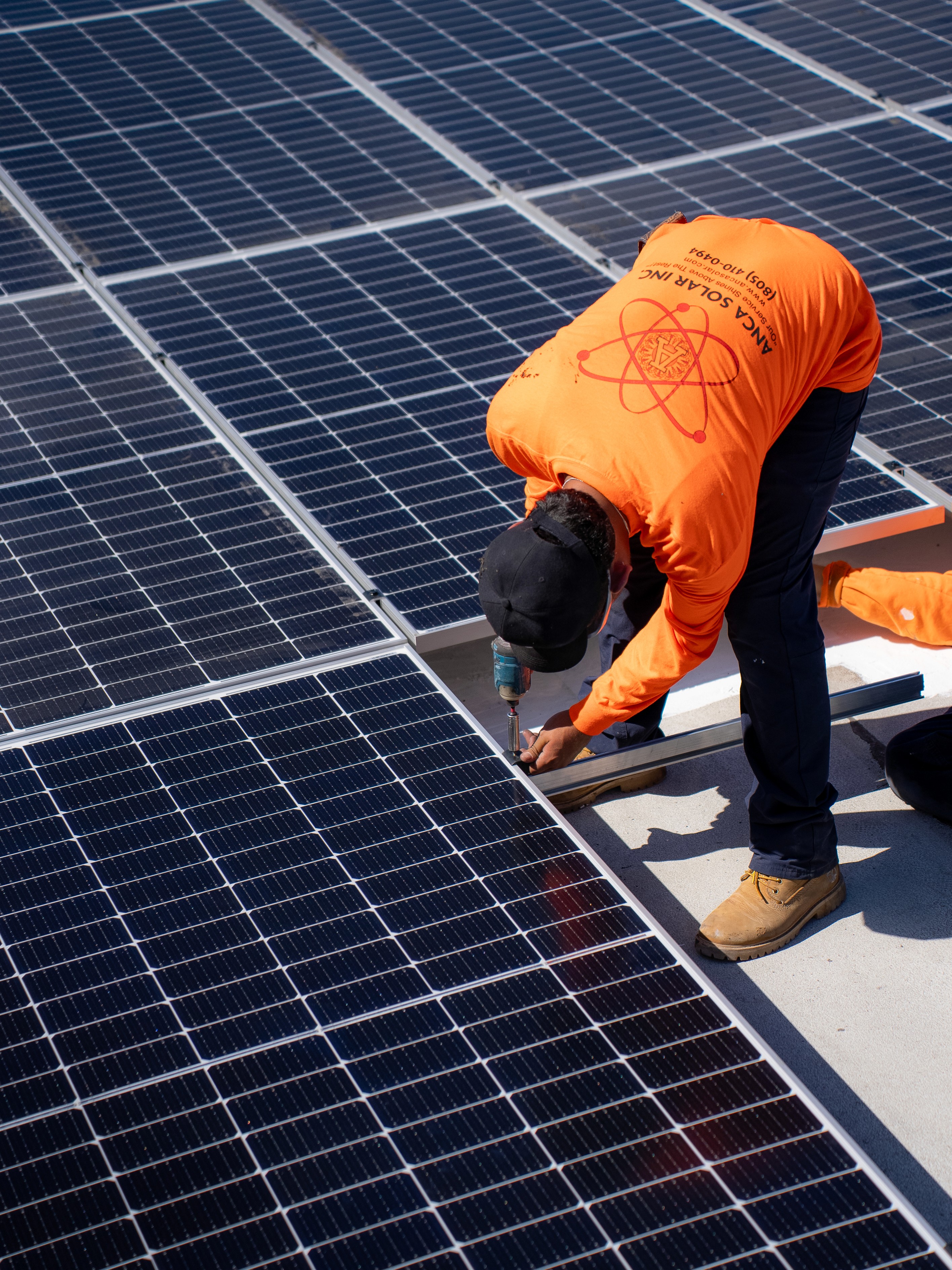
This is the exciting part — and it's faster than most people expect. A typical residential solar installation takes 1 day for solar-only, 1–2 days for solar+battery.
Day 1 (morning):
Crew arrives (typically 7–8 AM)
Safety setup, tarps to protect landscaping
Roof mounting hardware installed
Rails and racking system attached
Day 1 (afternoon):
Solar panels mounted on rails
Wiring run from roof to inverter location
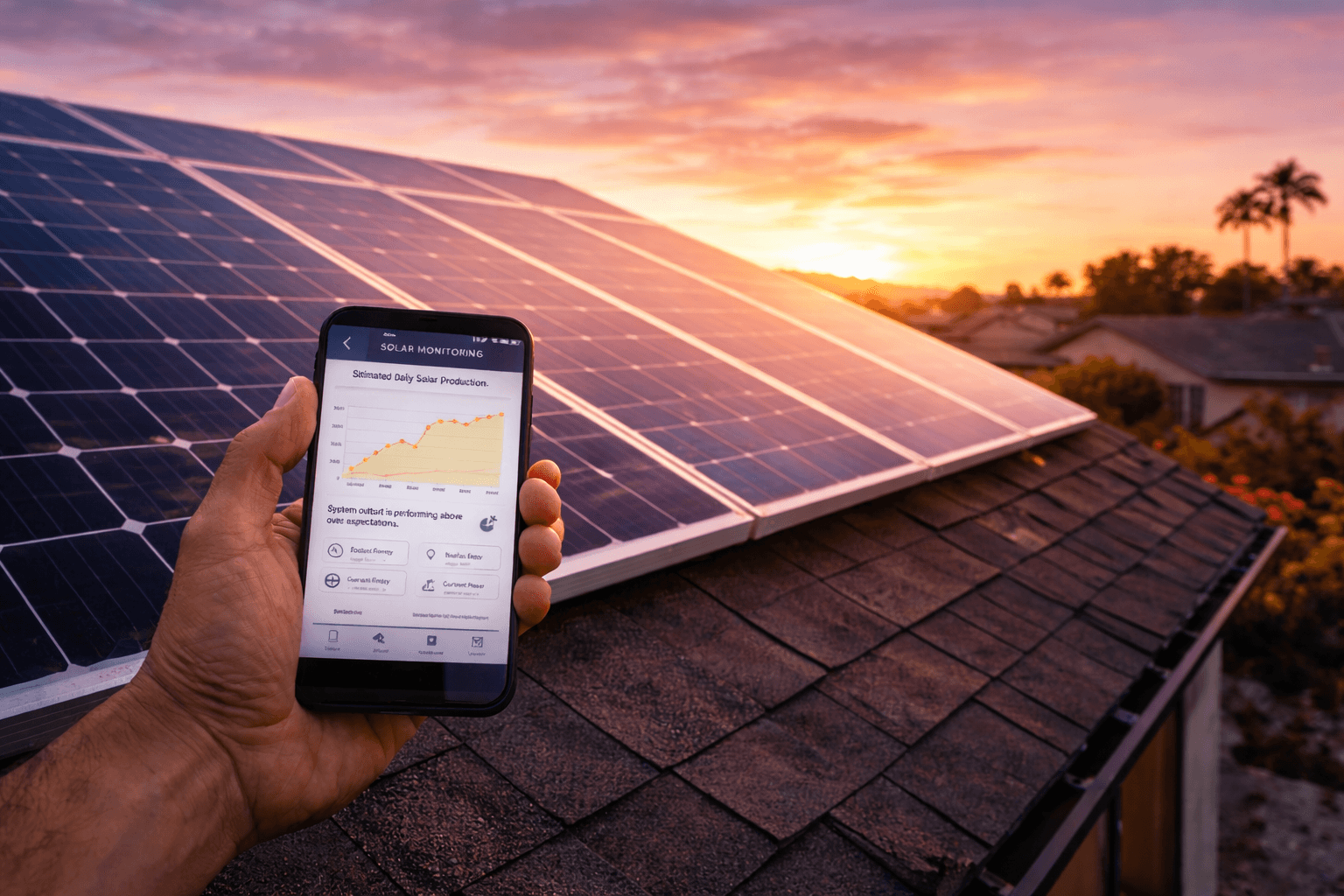
Inverter and monitoring equipment installed
Electrical connections made at main panel
Day 2 (if battery included):
Battery mounted (wall or floor)
Battery wired to inverter and main panel
Whole-home backup transfer switch installed (if applicable)
System testing and commissioning
At Anca Solar, our installation crews average 4–6 people, and we complete most systems in a single day. Your home's power stays on throughout — we only need a brief 30–60 minute shutdown to make the final electrical connections.
Phase 5: Inspection (Weeks 8–10)
After installation, your city's building department sends an inspector to verify the system meets code. This involves:
Verifying the system matches approved plans
Checking electrical connections and grounding
Confirming structural attachments
Reviewing fire setbacks and rapid shutdown compliance
Timeline: 1–2 weeks to schedule the inspection after installation. Most inspections take 30–60 minutes on-site. If any corrections are needed (rare with experienced installers), add another 1–2 weeks.
Phase 6: Utility Interconnection (Weeks 9–12)
The final step is getting permission from your utility to turn on the system and connect to the grid. This is called Permission to Operate (PTO).
SCE: Typically 2–4 weeks after inspection passes. SCE reviews your interconnection application, installs a new net meter (if needed), and issues PTO.
LADWP: Usually 1–3 weeks. LADWP tends to be faster than SCE for interconnection.
Municipal utilities (PWP, GWP, BWP): Generally 1–2 weeks. Smaller utilities often process applications faster.
Until you receive PTO, your system is installed but not allowed to export power to the grid. Most modern inverters allow you to produce and consume solar power during this waiting period, but you can't earn net metering/billing credits until PTO is granted.
Total Timeline Summary
Best case (simple system, fast jurisdiction): 6 weeks
Design: 3 days
Engineering: 5 days
Permitting: 5 days (express)
Installation: 1 day
Inspection: 5 days
Utility PTO: 10 days
Typical case: 8–10 weeks
Complex case (HOA, panel upgrade, battery, slow jurisdiction): 12–16 weeks
What Can Delay Your Installation?
Roof issues: If your roof needs repair or replacement before solar, add 1–4 weeks. It's better to address this upfront than to remove and reinstall panels later.
Main panel upgrade: Homes with 100A or 125A panels may need an upgrade to 200A to support solar (and especially battery/EV charger additions). This adds 1–3 weeks and $2,000–$4,000 to your project.
Tree removal/trimming: If trees shade your optimal panel area, trimming or removal adds time. Your installer will identify this during the site assessment.
Equipment availability: During periods of high demand, popular equipment (especially batteries) may have lead times of 2–8 weeks. Your installer should communicate any supply constraints upfront.
What You Need to Do During the Process
Homeowners are involved at a few key points:
Sign the contract and submit any financing applications
Be available for the site assessment (30–60 minutes)
Approve the final design before permitting
Be home on installation day (or provide access)
Be available for inspection (or provide access)
Everything else — engineering, permitting, utility coordination — is handled by your installer.
Ready to Start Your Solar Timeline?
The sooner you start, the sooner you're saving money on electricity. With California's NEM 3.0 rates and rising utility costs, every month without solar is money left on the table.
At Anca Solar, we've streamlined our process over 25 years to minimize delays. We handle all permitting, inspections, and utility coordination across Los Angeles, Orange, and Ventura Counties. CSLB License #873768.
Get your free consultation today and start your solar timeline.
Subscribe to our newsletter
Sign up to get the most recent blog articles in your email every week.