
Can You Install Solar Panels on a Concrete Tile Roof?
Absolutely — and if you live in Southern California, there's a good chance your home has one. Concrete and clay tile roofs are everywhere across Los Angeles, Orange, and Ventura Counties, from Spanish Colonial homes in Pasadena to Mediterranean-style developments in Irvine.
But tile roofs do require specialized installation techniques that not every solar company handles well. At Anca Solar, we've installed solar on hundreds of tile roofs since 2000. Here's what you need to know before getting started.
Why Tile Roofs Need Special Attention
Unlike asphalt shingle roofs where installers can simply lag-bolt mounting rails directly through the shingles, tile roofs present unique challenges:
Tiles are fragile: Concrete and clay tiles crack easily when walked on or improperly handled. An inexperienced crew can break dozens of tiles during installation, leading to leaks and costly replacements.
Tiles must be removed and replaced: Solar mounting hardware needs to attach to the roof deck, not the tiles. Tiles in the mounting areas are temporarily removed, mounts are installed on the underlayment/deck, and tiles are cut or replaced around the hardware.
Waterproofing is critical: Every penetration through the roof deck must be properly flashed and sealed. Tile roofs have a secondary water barrier (underlayment) that must remain intact.
Weight considerations: Tile roofs are already heavy (900–1,200 lbs per square). Adding solar panels (3–4 lbs per square foot) rarely causes structural issues, but your installer should verify that your roof structure can handle the combined load.
Tile Roof Solar Mounting Methods
Comp-Out Method (Most Common in SoCal)
The comp-out method is the most widely used approach for tile roof solar installations in Southern California:
Tiles are removed in the area where panels will be mounted
Composition (asphalt) shingles or flat roofing material is installed over the exposed deck
Standard solar mounting rails and lag bolts are installed through the comp material into the rafters
Solar panels are mounted on the rails
Remaining tiles are cut and fitted around the edges of the solar array
Pros: Lower cost, easier future maintenance, proven waterproofing, simpler to remove panels later for roof work.
Cons: Changes the appearance under the panels (not visible once panels are installed), requires careful edge flashing where comp meets tile.
Tile Hook Method
Tile hooks slide under the tiles and attach to the roof deck without removing tiles from the array area:
Individual tiles are lifted (not removed)
A hook mount slides under the tile and bolts to a rafter
The tile is lowered back into place with the hook protruding
Rails attach to the hooks, and panels mount on the rails
Pros: Preserves the tile roof appearance, no tiles need to be cut or replaced.
Cons: More expensive, harder to ensure waterproof seal at each penetration, tiles can crack during lifting, limited to certain tile profiles (flat and low-profile tiles work best).
Ballasted System (Flat Tile Only)
For flat concrete tile roofs with sufficient structural capacity, ballasted systems use weighted frames that sit on top of the tiles without penetrations. These are rare in residential applications but sometimes used on flat-roofed sections.
Cost: Tile Roof vs Shingle Roof Solar
Installing solar on a tile roof typically costs $500–$2,000 more than on an asphalt shingle roof, depending on the method and roof condition. Here's the breakdown:
Additional labor for tile work: $300–$800. Removing, cutting, and replacing tiles takes additional crew time.
Tile replacement materials: $100–$400. Some tiles inevitably break during the process. A good installer brings matching replacement tiles.
Comp-out materials: $100–$300. The composition shingles or flat roofing material for the comp-out area.
Enhanced flashing: $100–$500. Tile-to-comp transitions require custom flashing work.
For a typical 8 kW system on a tile roof in Los Angeles County, expect a total installed cost of approximately $21,000–$27,000 before the 30% federal tax credit ($14,700–$18,900 after ITC).
Common Tile Roof Solar Problems (and How to Avoid Them)
Roof Leaks
The number one complaint about solar on tile roofs is leaks — and it's almost always caused by improper installation. Key leak prevention measures include:
Flashing every roof penetration with code-compliant materials
Using proper sealants rated for Southern California's UV exposure and temperature swings
Ensuring the comp-out area is properly integrated with surrounding tile underlayment
Conducting a water test before panel installation
At Anca Solar, we guarantee our waterproofing with a 10-year workmanship warranty on all roof penetrations.
Broken Tiles
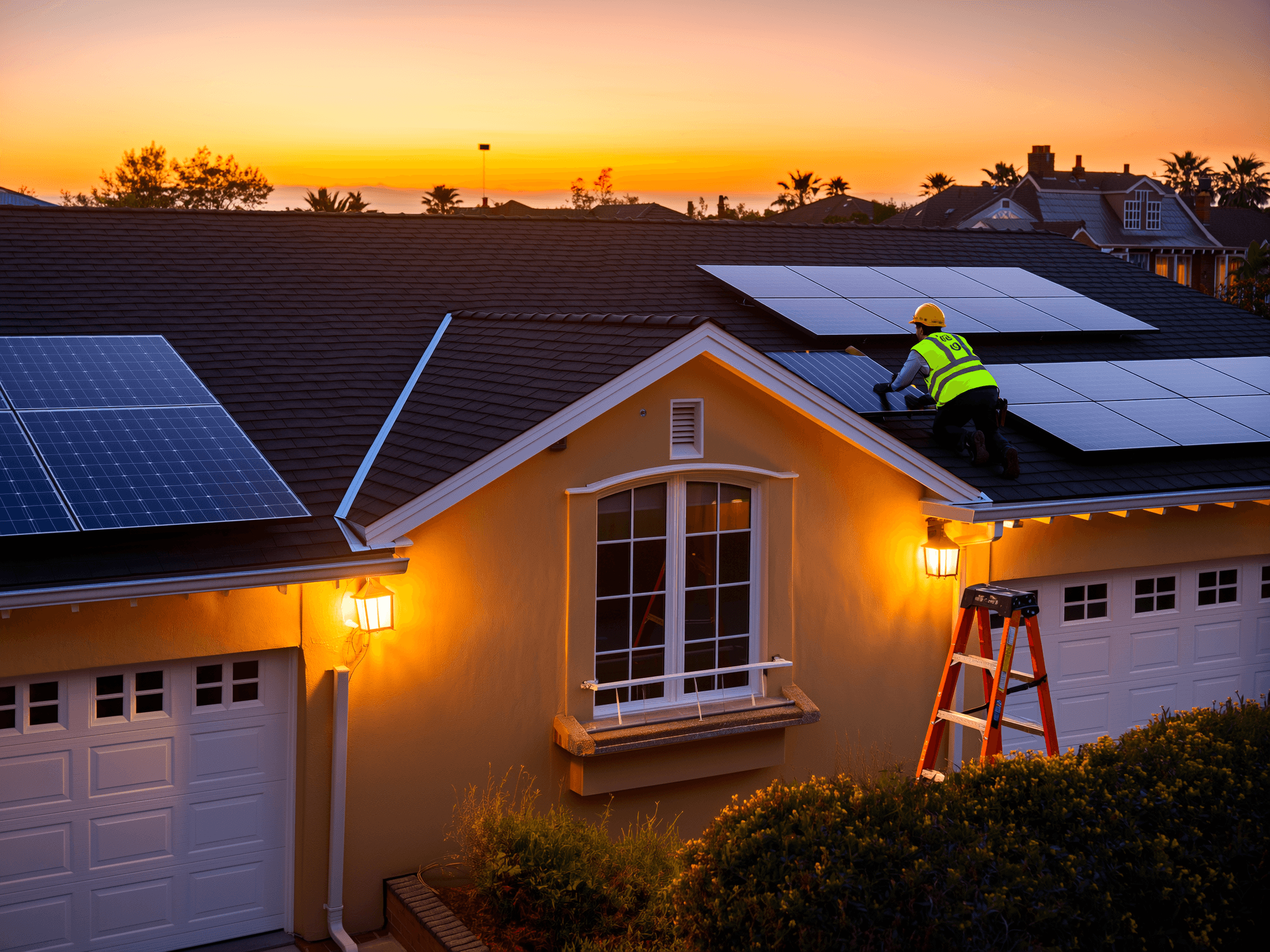
Experienced installers use foam pads and walk boards to distribute weight when working on tile roofs. We also photograph the roof condition before starting and bring matching replacement tiles for any that crack during the process.
Tip: If your home was built in a planned development (common in Irvine, Camarillo, and Santa Clarita), your builder likely used a specific tile that may still be available. We'll identify your tile profile and source replacements before starting.
Roof Age Concerns
Concrete tile roofs in Southern California typically last 40–50 years, but the underlayment beneath the tiles lasts only 20–30 years. If your tile roof is over 20 years old, it's worth having the underlayment inspected before installing solar.
If the underlayment needs replacement, doing it during solar installation saves money — the tiles are already being handled. Combining a re-underlayment with solar installation is significantly cheaper than doing them separately.
Tile Roof Solar: Flat vs S-Tile vs Barrel
Flat concrete tiles: Easiest to work with for solar. Both comp-out and tile hook methods work well. Common in newer developments across Orange and Ventura Counties.
S-tile (double Roman): The curved profile makes tile hooks trickier to install. Comp-out is usually preferred. Very common in LA neighborhoods from the 1970s–1990s.
Barrel (mission) tiles: The most challenging profile for solar installation. The deep curves require more extensive tile cutting and custom flashing. Found on high-end homes in Beverly Hills, Newport Beach, and Thousand Oaks.
Clay tiles: More fragile than concrete. Require extra care during handling but install similarly. Premium clay tiles on historic or custom homes may need specialized matching if replacements are needed.
Do Solar Panels Damage Tile Roofs?
When properly installed, solar panels actually protect the tiles beneath them from UV degradation, thermal cycling, and weather damage. The covered tiles often outlast exposed tiles by years.
The key word is "properly installed." Damage occurs when installers:
Walk directly on tiles without protection
Use improper mounting hardware that allows water intrusion
Fail to properly flash the comp-to-tile transition
Overtighten lag bolts, cracking the roof deck
This is why choosing an experienced tile roof installer matters more than choosing the cheapest quote.
Solar Panel Removal from Tile Roofs
If you ever need to remove panels for roof repair or re-roofing, the process depends on your mounting method:
Comp-out systems: Panels and rails are removed, comp material is stripped, new roofing is installed, and the solar system is reinstalled. Cost: $1,500–$3,500.
Tile hook systems: Panels and rails are removed, hooks are detached, roof work is completed, and the system is reinstalled with new hardware. Cost: $2,000–$4,000 (hooks usually can't be reused).
Choosing a Tile Roof Solar Installer
Not all solar companies have experience with tile roofs. When getting quotes, ask:
How many tile roof installations have you completed?
Which mounting method do you recommend for my tile type, and why?
What is your warranty on roof penetrations and waterproofing?
Do you carry spare tiles matching my roof profile?
Can you show me photos of completed tile roof installations?
At Anca Solar, tile roofs are our bread and butter — they account for roughly 60% of our residential installations across Southern California. Our crews are specifically trained in tile handling, and we maintain inventory of common tile profiles used in LA, Orange, and Ventura County developments.
We offer free consultations that include a tile roof assessment. We'll inspect your tiles, underlayment condition, and structural capacity before recommending a mounting approach. CSLB License #873768.
Subscribe to our newsletter
Sign up to get the most recent blog articles in your email every week.