Choosing between two premium solar panels is one of the more practical decisions in a solar project — but it's also one where the wrong choice for your specific conditions can quietly cost you output every summer for 25 years. This guide compares the REC Alpha Pure-RX and the Silfab Elite SIL-420 BG across the conditions that actually matter in Southern California: inland heat, coastal salt air, high-fire-hazard zones, and long-term durability.
Both panels are legitimate premium options. But they are not interchangeable. The REC's temperature coefficient is 57% lower than the Silfab's — which, in a region where roof surface temperatures routinely exceed 130°F on summer afternoons, is not a footnote. It is the number that determines what your system actually produces on the days you need it most.
Side-by-side specifications: what the datasheets actually say
Before comparing these panels in context, here are the verified specs from each manufacturer's official datasheet. REC's figures come from the April 2025 REC Alpha Pure-RX datasheet (recgroup.com). Silfab's figures come from the January 2026 SIL-420 BG datasheet (silfabsolar.com). No third-party review sites were used.
Specification comparison table
Specification | REC Alpha Pure-RX | Silfab Elite SIL-420 BG |
|---|---|---|
Peak power (Wp) | 470 W | 420 W |
Efficiency | 22.6% | 21.9% |
Temperature coefficient (Pmax) | −0.24%/°C | −0.377%/°C |
Annual degradation | ≤0.25%/yr | ≤0.30%/yr |
Hail resistance | 45 mm (third-party tested) | 25 mm (IEC standard) |
Salt mist rating | IEC 61701 SM6 (highest class) | IEC 61701:2020 (class unspecified) |
Fire rating | UL Type 2 / IEC Class C | UL Type 1 / Class A equivalent |
Product warranty | 20 yr standard / 25 yr with ProTrust* | 25 years |
Performance warranty | 25 years | 30 years |
Country of manufacture | Singapore | USA (Burlington, WA and Fort Mill, SC) |
Independent reliability recognition | — | Kiwa PVEL Top Performer 2024 |
*REC's 25-year product warranty requires registration through Anca Solar's current REC ProTrust Certified Pro status — verify before quoting on any specific project.
What those numbers mean in plain terms
A few items in the table need context before you can use them as decision inputs.
The 50-watt gap at STC conditions: Standard Test Conditions (25°C module temperature, 1,000 W/m² irradiance) are a laboratory benchmark, not a SoCal rooftop. On a July afternoon in the San Fernando Valley, your roof surface temperature is likely 55–65°C, not 25°C. At those temperatures, the temperature coefficient becomes the more important number than the nameplate wattage — which brings us to the central comparison.
The degradation gap compounds over decades: A 0.05 percentage-point annual degradation difference (0.25% vs 0.30%) sounds trivial, but at year 25, the REC panel retains roughly 94% of its original output while the Silfab retains approximately 92.5%. On a 10 kW system, that is about 150 watts of capacity difference — roughly one full panel's worth of output — by the time you are approaching warranty expiration. This is part of the reason that understanding how to monitor panel degradation over time matters starting on day one.
The fire rating is a real specification, not marketing language: UL Type 1 and UL Type 2 are distinct fire classifications under UL 1703 / UL 61730. Type 1 indicates the module is self-supporting when used as a roofing component — functionally equivalent to a Class A fire rating. Type 2 requires a Class A-rated roof deck beneath it. For homes in California's High Fire Hazard Severity Zones (HFHSZ), local authorities having jurisdiction (AHJs) often require additional documentation; confirm the specific requirement with your local fire department or building department before installation.
The temperature coefficient is the decisive SoCal factor
Southern California's solar advantage is real — 280+ sunny days per year, some of the highest irradiance levels in the continental United States. But that sunshine comes with heat, and heat is the single biggest performance variable between these two panels for most SoCal homeowners.
How temperature coefficient works in practice
Every solar panel loses output as its cell temperature rises above 25°C. The temperature coefficient (Pmax) tells you how much output is lost per degree Celsius of temperature increase. For the REC Alpha Pure-RX, that figure is −0.24%/°C. For the Silfab SIL-420 BG, it is −0.377%/°C.
To put that in real-world terms: on a summer afternoon when module temperature reaches 65°C — a conservative estimate for a well-ventilated roof in the San Gabriel Valley or the Inland Empire — both panels are operating 40°C above STC.
REC Alpha Pure-RX at 65°C module temp: loses 40 × 0.24% = 9.6% of rated output. A 470W panel delivers approximately 425W.
Silfab SIL-420 BG at 65°C module temp: loses 40 × 0.377% = 15.1% of rated output. A 420W panel delivers approximately 357W.
The gap under heat: At 65°C module temperature, the REC is producing roughly 68W more per panel than the Silfab. On a 20-panel system, that is 1,360 watts of additional real-time production — on the hottest, sunniest afternoons, when your air conditioner is running hardest.
"The REC's temperature coefficient is not a tiebreaker — it is the specification that determines which panel wins on the 30 days per year when your system matters most."
Homes with limited roof space where you are maximizing panels per square foot will also favor the REC, since its 22.6% efficiency slightly outperforms the Silfab's 21.9%. But for the typical SoCal installation — a 7–12 kW system with adequate roof space — the temperature coefficient advantage is larger and more durable than the efficiency gap.
Where inland valley homeowners feel this most
The temperature coefficient difference is most pronounced in ZIP codes with regular triple-digit summer highs: the San Fernando Valley, San Gabriel Valley, Riverside, and the Inland Empire. In these areas, module temperatures on a clear August afternoon can reach 70–75°C on a south-facing roof with limited airflow beneath the panels. At 75°C — 50°C above STC — the REC loses 12% and the Silfab loses 18.85%. That is a 6.85-percentage-point production gap in the conditions that occur multiple times per week, July through September.
Coastal homeowners — Malibu, Santa Monica, Long Beach, Ventura — see smaller differences because marine layer keeps module temperatures lower. For those installations, the choice shifts toward the salt mist rating and the fire zone question, discussed below.
Where Silfab has the edge: fire zones, US manufacturing, and long-term warranty
The temperature coefficient comparison favors REC clearly, but a complete evaluation requires accounting for the scenarios where Silfab holds a genuine advantage. Three stand out for SoCal homeowners specifically.
High Fire Hazard Severity Zones: UL Type 1 matters
California's HFHSZ map covers a significant portion of the hillside and foothill communities in Los Angeles, Ventura, and Orange Counties. The Silfab SIL-420 BG carries a UL Type 1 fire rating — the highest module-level fire classification — compared to the REC Alpha Pure-RX's UL Type 2. For homes where a local AHJ requires documentation of a panel's standalone fire performance, Silfab's Type 1 rating simplifies permitting.
If your home is on a hillside in Altadena, Shadow Hills, Topanga, or similar HFHSZ communities — or in any area where your roofing material and fire classification have already been scrutinized by your insurance carrier — confirm the specific AHJ requirement before making the panel decision. We routinely handle installs in fire-zone neighborhoods, and the permitting requirements vary by jurisdiction. Our team can confirm what your local AHJ accepts as part of the installation planning process.
US manufacturing and tariff exposure
The Silfab SIL-420 BG is manufactured in Burlington, Washington and Fort Mill, South Carolina — both domestic facilities. The REC Alpha Pure-RX is manufactured in Singapore. In the current tariff environment, the domestic manufacturing origin of Silfab panels provides insulation against module cost increases driven by import duties. This is not a performance specification, but it is a legitimate procurement consideration for homeowners and installers concerned about pricing stability between quote and installation.
That said, panel pricing shifts frequently, and the tariff picture can change. When you request a quote, we can give you current pricing on both options and flag any near-term pricing risk we are aware of.
Warranty depth: Silfab's 30-year performance commitment
Silfab's performance warranty runs to 30 years — five years longer than REC's standard 25-year performance warranty. This is a genuine differentiator for homeowners who plan to stay in their home well beyond the typical payback period and want the longest contractual performance guarantee available. The Silfab warranty also earned Kiwa PVEL's Top Performer recognition in 2024, which is an independent reliability benchmark that covers real-world durability beyond standard certification testing.
The REC warranty picture is more nuanced. The standard product warranty is 20 years, but it can be extended to 25 years through registration under REC's ProTrust program — which requires installation by a REC Certified Pro installer. This requires Anca Solar's current Certified Pro status; confirm this before quoting the extended warranty on any specific project.
Coastal installs and salt mist: what the ratings mean
If your home is within three miles of the Pacific — properties in Malibu, Pacific Palisades, Hermosa Beach, Redondo Beach, Santa Monica, Oxnard, or Ventura — salt mist corrosion is a real degradation driver that compounds over years. Saline air attacks solder joints, frame seals, and junction box connections. The IEC 61701 salt mist standard measures a panel's resistance to this environment.
REC SM6 vs Silfab's unclassified IEC 61701 compliance
The REC Alpha Pure-RX carries IEC 61701 certification at the SM6 severity class — the highest classification in the standard. Silfab's datasheet lists IEC 61701:2020 compliance but does not specify the severity class achieved. Until Silfab publishes the specific class or makes it available via a test certificate, the SM6 rating is a REC-exclusive verifiable claim.
For direct coastal installations (within one mile of the ocean): REC's confirmed SM6 rating provides documented protection at the most aggressive salt exposure level. This is a meaningful tiebreaker when performance and degradation risks from corrosion are the primary concern.
For inland-coastal installations (one to five miles): Salt exposure drops significantly with distance. The unspecified Silfab IEC 61701 compliance — even without a confirmed class — is likely adequate for most inland-coastal microclimates, but we would note the documentation gap when advising on specific projects.
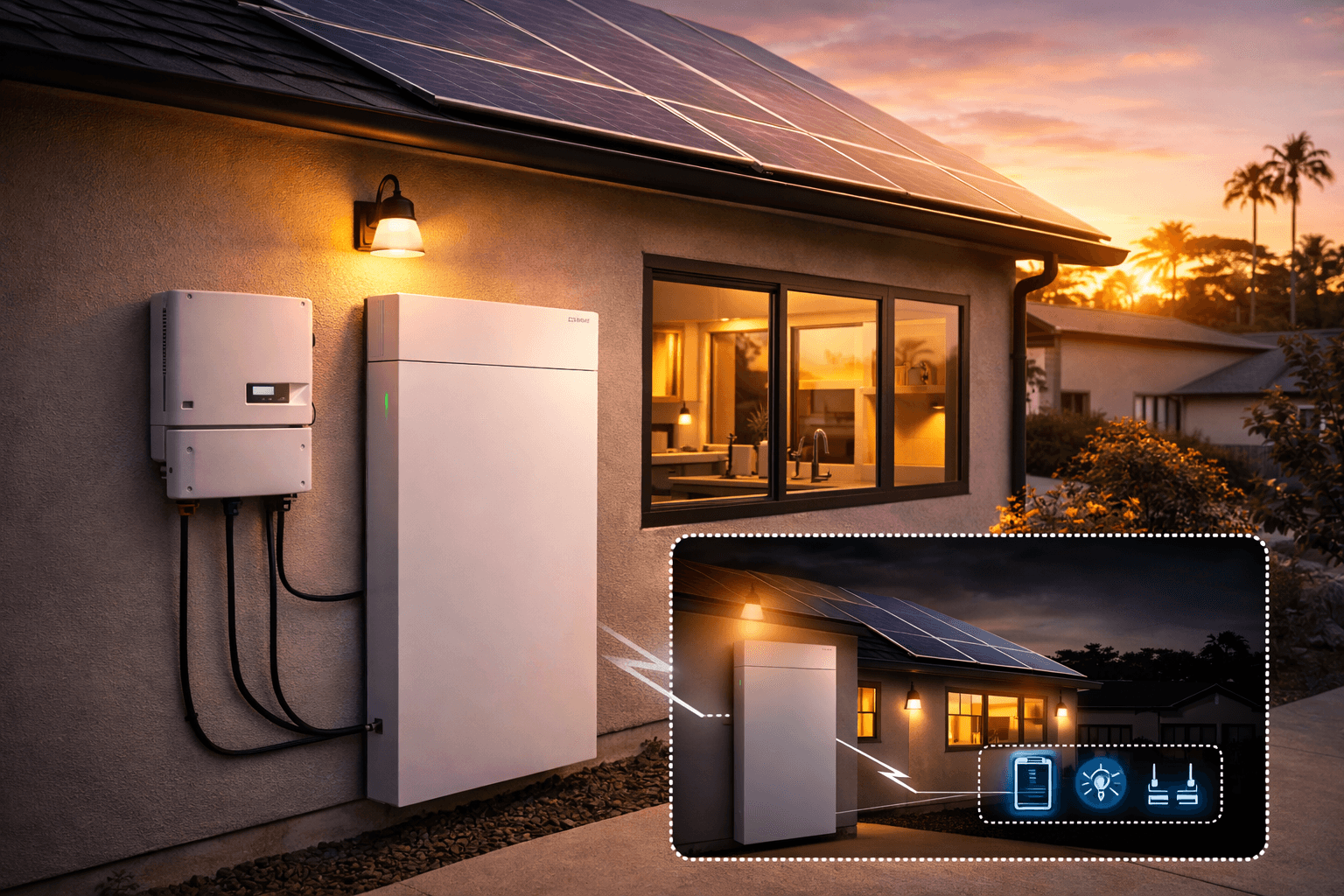
For homeowners considering a coastal installation, pairing either panel with the right battery storage system also helps manage the times when salt fog reduces irradiance — a common late-spring and early-summer condition in coastal SoCal that affects system economics in ways that are worth modeling before you finalize your system size.
How to choose: a decision guide for SoCal homeowners
Most homeowners in our service area fall into one of four situations. Here is how we think about the panel choice for each.
Decision guide by installation context
Inland valleys — San Fernando Valley, San Gabriel Valley, Inland Empire: The heat advantage of the REC Alpha Pure-RX is most pronounced here. Unless your home is in an HFHSZ where the AHJ specifically requires UL Type 1 documentation and your roof type adds complexity, the REC's −0.24%/°C temperature coefficient delivers measurably more production on the 60–90 hottest days of the year. We typically recommend REC for these locations.
Hillside and fire-zone communities — Altadena, Topanga, Shadow Hills, Malibu hills: Silfab's UL Type 1 fire rating simplifies permitting and satisfies the most stringent AHJ fire documentation requirements. For homes with shake or wood roofing that is being replaced as part of the solar project, confirming the panel's fire classification in advance saves time in permitting. For these installs, Silfab is worth prioritizing, and the temperature coefficient difference is partially offset by the fact that hillside homes often have better airflow beneath the panels than flat-roof suburban installations. We have significant experience with fire-zone rooftop installations across LA County.
Direct coastal — within one mile of the ocean: REC's confirmed IEC 61701 SM6 rating is the strongest documented protection against salt mist degradation at this distance. The temperature coefficient advantage also applies in summer, though coastal marine layer keeps module temperatures lower than inland equivalents. REC is the more defensible choice for direct coastal.
Homeowners prioritizing US-made products or maximum warranty length: Silfab's domestic manufacturing and 30-year performance warranty are the longest and most locally-produced option in this comparison. If those factors matter — whether for Buy American program alignment, SGIP documentation simplicity, or personal preference — Silfab is the clear choice on those dimensions.
"There is no universally correct answer between these two panels — but for most of our LA County and Ventura County customers, the REC's heat performance wins on the math. The exceptions are real, and worth identifying before you sign a contract."
One additional note on system design: the panel choice interacts with your inverter selection, roof layout, and shading profile. A 20-panel REC system with microinverters will behave differently from the same panel count with a string inverter — and in either case, what the system actually produces at year 10 depends as much on how it is monitored and maintained as on the panel specs at installation. We cover the degradation monitoring piece in detail in our guide to solar panel lifespan and long-term output.
The bottom line
The REC Alpha Pure-RX and Silfab Elite SIL-420 BG are both well-engineered panels with strong manufacturer backing. But they serve different installation profiles. The REC wins on heat performance — its −0.24%/°C temperature coefficient outperforms the Silfab's −0.377%/°C by 57%, a gap that is most consequential in inland valleys and during summer peak hours. The Silfab wins on fire zone documentation (UL Type 1), domestic manufacturing, and warranty length (30-year performance). For direct coastal installs, REC's confirmed SM6 salt mist rating provides the strongest documented protection. Neither panel has a universally correct application in SoCal — the right choice depends on your location, roof characteristics, and what you are optimizing for.
We carry and install both panels across Los Angeles, Orange, and Ventura Counties. Every project we quote includes a site-specific system design — not a generic spec sheet. If you want to know which panel makes more sense for your specific address, roof orientation, and local conditions, we can give you a direct answer as part of a free consultation. Schedule your free solar consultation with Anca Solar — we bring 25+ years of installation experience to every project and will tell you plainly which panel earns its price on your roof. (CSLB License #873768.)
Subscribe to our newsletter
Sign up to get the most recent blog articles in your email every week.