Last Call for Tax-Free Solar: California's Property Tax Exclusion Sunsets January 1, 2027
LOS ANGELES, CA — March 28, 2026 — ANCA Solar, a trusted solar installation company serving Los Angeles, Orange, and Ventura Counties since 2000, is alerting homeowners and commercial property owners to a critical deadline: California's Active Solar Energy System Exclusion under Section 73 of the Revenue and Taxation Code is scheduled to expire on January 1, 2027.
This exclusion currently prevents solar panel and battery storage installations from triggering a property tax reassessment. Once it sunsets, new solar installations could increase a property's assessed value — and its annual tax bill — by thousands of dollars.
What Is the Solar Property Tax Exclusion?
Under current California law, the addition of an active solar energy system to a property is excluded from the property's assessed value. This means homeowners can add $15,000 to $50,000 or more in solar equipment value without seeing any increase in their property taxes.
For commercial and agricultural property owners, the stakes are even higher. A commercial solar installation costing $1 million to $2 million would, without the exclusion, trigger a significant increase in annual property taxes based on the system's full assessed value.
Why the Deadline Matters Now
The legislative effort to extend the exclusion has stalled. Senate Bill 710 (SB 710), which originally sought to make the tax exclusion permanent, was significantly weakened following opposition from local government officials who argued the exclusion deprives counties of needed property tax revenue for schools and infrastructure.
The current version of SB 710 only protects systems that are fully completed and operational before December 31, 2026 from future reassessment. It does not extend the benefit to new systems installed after the deadline.
Key Deadlines to Understand
Systems must be fully completed and operational by December 31, 2026 to qualify for the exclusion
Systems under construction as of January 1, 2026 qualify only if finished before the 2027 sunset
Partially completed projects face a split assessment — only the portion completed by year-end is exempt
Commercial systems require 12 to 18 months for design, permitting, and interconnection — meaning Q1 2026 is the final window to begin
"This is not a drill. Homeowners who have been considering solar have a narrow window to lock in one of the most valuable financial benefits available. A typical residential system adds $15,000 or more in property value — tax-free — but only if it's operational before the end of 2026."
— Carlos Vega, Founder of ANCA Solar (CSLB License #873768)
What Homeowners Should Do Right Now
Schedule a consultation immediately — Design and permitting can take 2 to 4 months for residential systems
Get multiple quotes — But don't delay; installer capacity will tighten as the deadline approaches
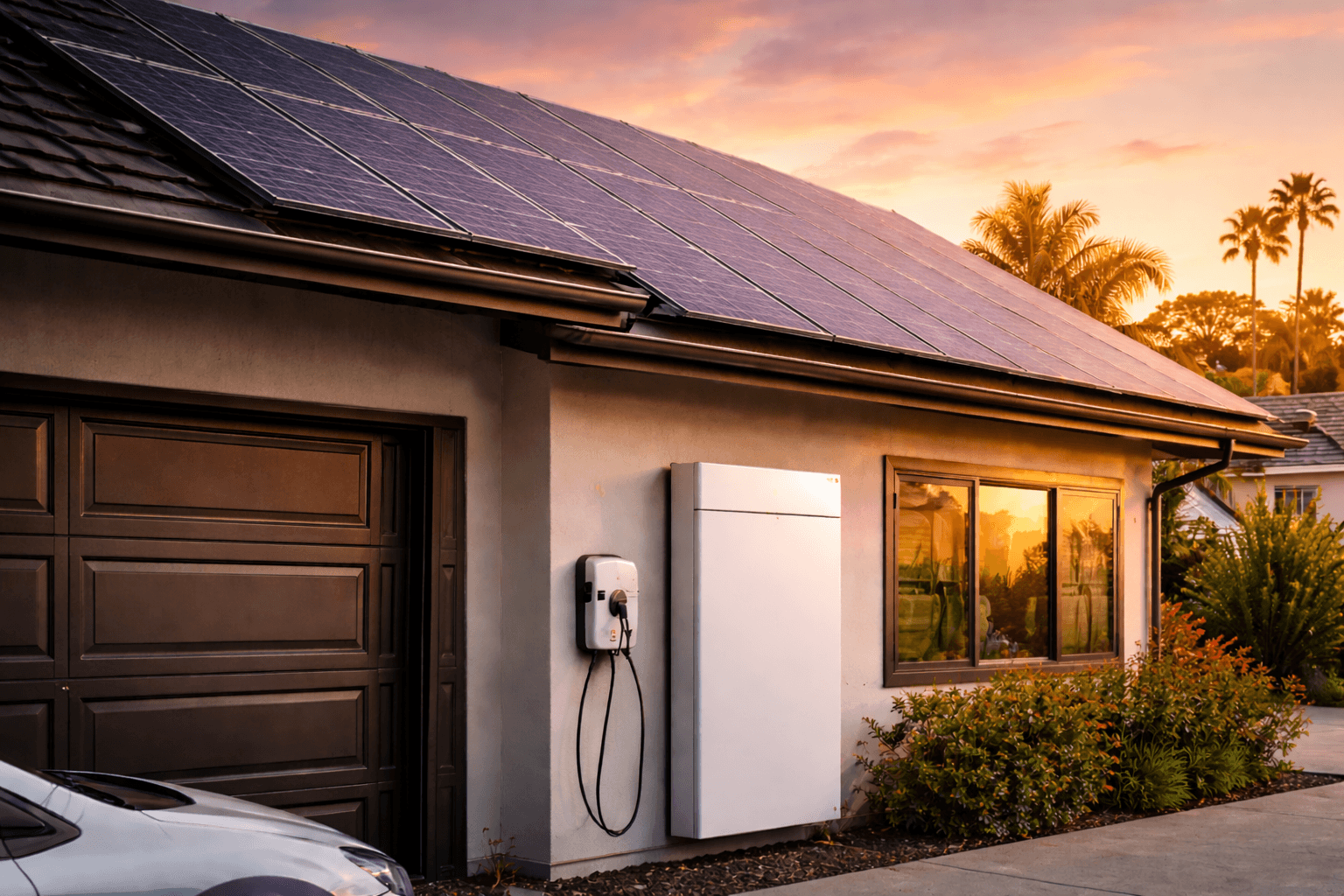
Consider battery storage — Under NEM 3.0, solar panels without batteries have payback periods exceeding 10 years; adding a battery brings it down to 7 to 9 years
Document everything — Keep records of permits, contracts, and utility interconnection agreements to prove completion before the deadline
What Commercial Property Owners Must Know
For businesses, the urgency is even greater. Commercial solar projects involve:
Complex engineering and design (2-4 months)
Permitting through local building departments (1-3 months)
Equipment procurement and installation (2-4 months)
Utility interconnection and Permission to Operate (1-3 months)
This means a commercial project started today in March 2026 may barely make the December deadline. Projects initiated after mid-2026 face serious risk of missing the exclusion entirely.
ANCA Solar's Commitment
ANCA Solar is prioritizing projects that need to meet the December 2026 deadline. With 25 years of experience navigating California's permitting processes across Los Angeles, Orange, and Ventura Counties, ANCA Solar can provide realistic timelines and expedited project management to help customers qualify before the exclusion expires.
About ANCA Solar
Founded in 2000 by Carlos Vega, ANCA Solar is a licensed and insured solar installation company (CSLB License #873768) serving residential and commercial customers across Los Angeles, Orange, and Ventura Counties. ANCA Solar specializes in solar panel installation, battery energy storage systems, and comprehensive energy solutions.
For more information or to schedule a free consultation, visit www.ancasolar.com.
Media Contact:
ANCA Solar
Los Angeles, California
Website: www.ancasolar.com
Phone: (805) 410-0494
Subscribe to our newsletter
Sign up to get the most recent blog articles in your email every week.