Southern California homeowners who installed solar in the last two years under the Net Billing Tariff face a straightforward problem: the tariff pays very little for midday solar exports, but pays significantly more for energy dispatched in the evening peak window. A battery solves that problem — and the Franklin WH aPower 2 is one of the most capable single-unit whole-home batteries on the California market in 2026. This guide covers everything you need to evaluate it honestly: the confirmed specifications, how it compares to the Enphase IQ Battery 5P, the 2026 incentive landscape after the federal ITC expired, and what the installation actually looks like.
The short version: the aPower 2 delivers 15 kWh of usable storage and 10 kW of continuous power in a single outdoor-rated enclosure — enough to run a 5-ton central air conditioner and the rest of your home simultaneously. According to the CPUC, nearly 70% of Net Billing Tariff customers in California had paired battery storage with their solar by the end of 2024. The economics behind that number are the most important context for understanding this product.
Franklin WH aPower 2 specifications: what the spec sheet actually says
The aPower 2 was announced in September 2024 and became generally available in January 2025. FranklinWH positions it as a whole-home backup system — meaning a single unit is designed to cover the entire load of most residential properties, not just essential circuits. Understanding the confirmed specifications is the starting point for evaluating whether that claim holds for your specific home.
Core specifications confirmed from FranklinWH and EnergySage
The following specifications are drawn from FranklinWH's product page and general availability announcement (January 15, 2025), corroborated by the EnergySage equipment listing (2025).
Usable energy capacity: 15 kWh at 100% depth of discharge. This is what you actually get, not a nameplate figure discounted by a DoD limit.
Continuous power output: 10 kW. A 3-ton central A/C draws 3–4 kW running; a 5-ton unit draws 5–6 kW. The aPower 2 can run large central A/C and still power a full kitchen, home office, and lighting simultaneously — something most single-cabinet competitors cannot claim.
Peak (surge) power: 15 kW. Motor-start surge on a 5-ton A/C compressor can hit 3–5 times the running draw. FranklinWH's product page confirms the aPower 2 can "support home loads while starting a 5-ton AC" without tripping.
Charge rate: 8 kW. A fully depleted aPower 2 returns to full in under two hours of peak solar production — fast enough to recover from a nighttime outage and be fully recharged before the next evening peak window.
Round-trip efficiency: 90%. For every 10 kWh stored, 9 kWh is delivered. Note: the 90.5% efficiency figure sometimes cited in reviews refers to the Franklin WH aPower S — a different, higher-end product. Use 90% for the aPower 2.
Battery chemistry: Lithium Iron Phosphate (LFP). LFP does not require active thermal management and handles high ambient temperatures more reliably than NMC cells — a practical advantage for units mounted outdoors in Eagle Rock or Pasadena summer heat.
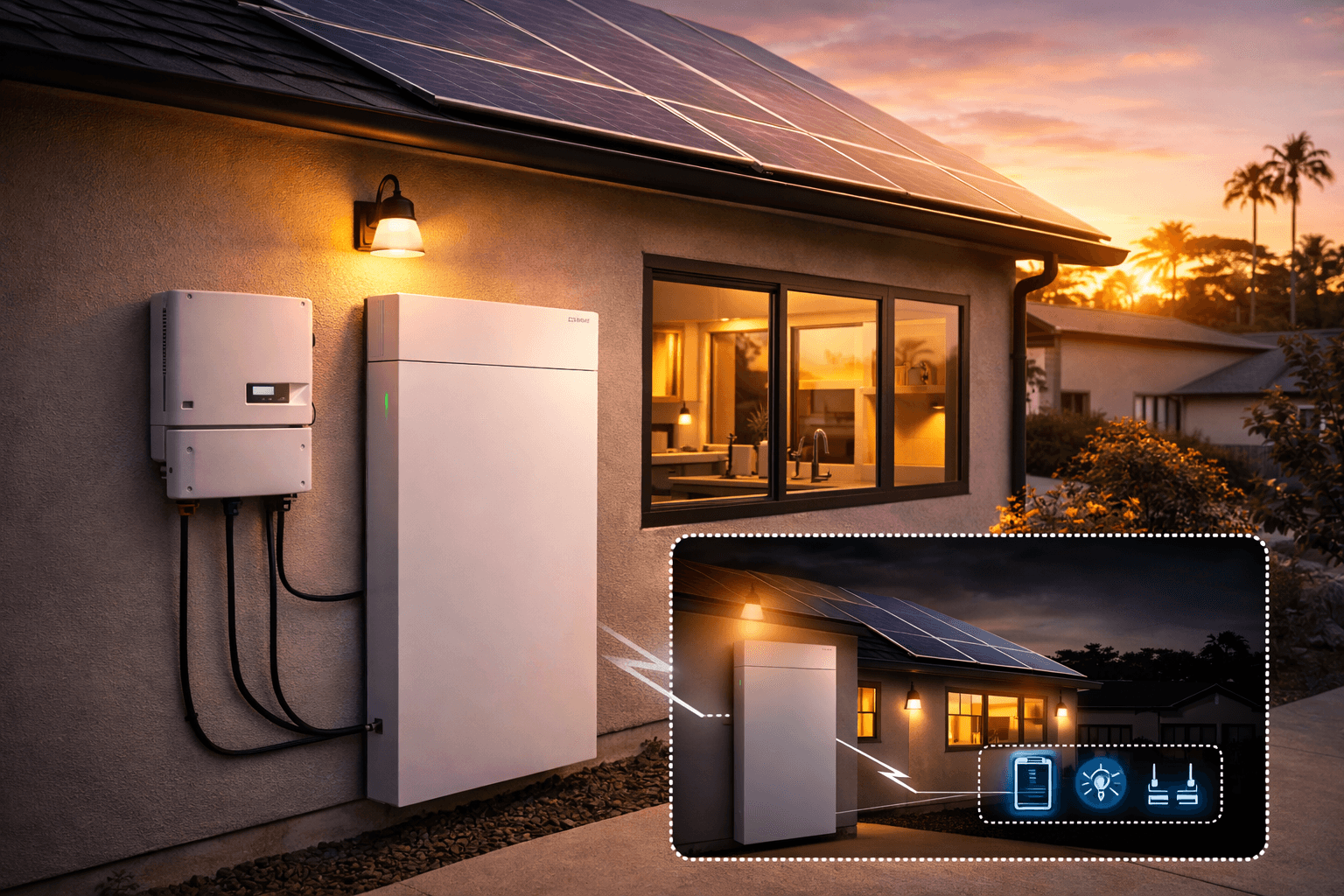
Operating temperature: -4°F to 131°F; weatherproofing: IP67. The aPower 2 operates across the full range of SoCal outdoor conditions and is rated for temporary water immersion — suitable for exterior wall, covered patio, or garage installation.
Noise: 30 dBA, fanless. Passive cooling with no moving parts. At 30 dBA — below a whispered conversation — placement near bedrooms or shared property-line walls is not an issue.
Dimensions: approximately 29.5 × 45.2 × 11.8 inches (750 × 1149 × 300 mm), confirmed via EnergySage equipment listing. Weight is not published here — the datasheet exists as a binary PDF we could not extract; ask your installer for the confirmed figure before finalizing mounting hardware.
Warranty: 15 years or 60 MWh throughput, 70% capacity retention at end of term. At one full cycle per day, the calendar term (15 years) will be the binding constraint for most homes — the throughput limit is not the practical ceiling for residential use patterns.
Scalability: up to 15 units per aGate (225 kWh maximum). Most California homes need one unit. Multi-unit dwellings, homes with EV fleets, or virtual power plant participants can stack up to 225 kWh on a single aGate system.
Certifications: UL 1741, UL 1973, UL 9540, FCC Part 15 Class B. The aPower 2 has also completed UL 9540A fire-propagation testing by CSA Group — the test standard that governs NFPA 855-compliant installation in California residential settings.
How the aPower 2 compares to the aPower 1.3 it replaced
FranklinWH does not make a single-page side-by-side comparison of the aPower 1.3 and aPower 2, but their live product pages confirm both sets of specs, and the differences are significant enough to matter if you are evaluating a system proposed before the aPower 2 launched. The following comparison is derived from comparing both product pages directly.
Specification | aPower 1.3 | aPower 2 | Change |
|---|---|---|---|
Usable capacity | 13.6 kWh | 15 kWh | +10.3% |
Continuous power | 5 kW | 10 kW | +100% |
Peak (surge) power | 10 kW | 15 kW | +50% |
Warranty term | 12 years | 15 years | +25% |
Throughput guarantee | 43 MWh | 60 MWh | +39.5% |
HVAC support | 4-ton A/C | 5-ton A/C | +1 ton |
Max system per aGate | 204 kWh | 225 kWh | +10.3% |
The headline improvement is not the 10% capacity gain — it is the 100% jump in continuous power. Going from 5 kW to 10 kW of continuous output is the difference between running essential circuits and running your whole home. If your installer ever proposed the aPower 1.3, recalculate your load analysis with the aPower 2 before finalizing system design.
The aGate: the component that makes the aPower 2 a system, not just a battery
The aPower 2 does not operate alone. It works as part of the Franklin Home Power system, where the aGate — described by FranklinWH as "the brain of the energy ecosystem" — manages the energy flow between your solar array, battery, home loads, grid, and any other sources like a generator or EV charger. Understanding the aGate is essential to understanding what you are actually buying when you buy an aPower 2.
What the aGate does that other energy management systems do not
The aGate carries a 280-amp busbar. This is the detail that matters most for installation cost and simplicity. Most California homes have a 200-amp main electrical panel. When a competing battery system requires a panel upgrade as part of installation, the cost can add $3,000 to $8,000 to the project. The aGate's 280-amp busbar is designed to sit between the utility meter and your existing panel — in most cases, it eliminates the need for a main panel upgrade entirely. We have completed aPower 2 installations in older Eagle Rock homes with 150-amp panels without requiring a panel replacement; the aGate handled the interconnection.
Multiple communication options. The aGate supports Wi-Fi, Ethernet, and 4G connectivity for ongoing monitoring and remote management, providing redundancy if home internet drops.
Black start capability. "Black start" means the aGate can bring your solar and battery system back online after a complete grid outage without needing grid power to restart the inverter. This matters during extended multi-day outages — a scenario that is increasingly relevant for foothill communities in LA and Ventura Counties during red flag fire events.
Virtual Power Plant (VPP) readiness. The aGate is confirmed VPP-compatible. VPP programs — where utilities pay battery owners to discharge stored energy during grid stress events — are an emerging revenue stream in California. The SCE and SDG&E VPP programs are still in early stages, but owning VPP-ready hardware means you are positioned to participate when programs expand, without a hardware upgrade.
Cross-inverter compatibility. The aGate works with both microinverter and string inverter systems — Enphase IQ8, SolarEdge, SMA, and other major brands. If you have existing non-FranklinWH solar, the aPower 2 can still be added as storage without replacing your inverter.
Time-of-use optimization. The aGate uses your utility rate schedule to automatically charge the battery when rates are low and discharge when rates are high. Under SCE's TOU-D rate, this means charging during off-peak morning hours and dispatching during the 4–9 PM peak window. No manual programming required after initial setup.
The aGate carries a 12-year warranty — three years shorter than the aPower 2's 15-year battery warranty. This is worth noting in any long-term system economics conversation: the gateway component has a shorter guaranteed lifespan than the battery it manages, which is the common pattern across most residential storage systems on the market.
"In most cases, a single aPower 2 paired with the aGate is sufficient for whole-home backup and NEM 3.0 optimization on a typical Southern California residential property. The question is not whether the hardware can do it — it is whether the system is sized and programmed correctly for your specific load profile and rate schedule."
aPower 2 vs. Enphase IQ Battery 5P: an honest comparison
These two products are the most common comparison we field from homeowners evaluating battery storage in 2026. Both are AC-coupled, both use LFP chemistry, both carry UL 9540 listings and 15-year warranties. They are not interchangeable — they are designed for meaningfully different installation scenarios. Here is what the data actually shows, sourced from the EnergySage equipment listings for both products (pricing figures are marketplace averages that require a ZIP code lookup on EnergySage's site).
Specification | Franklin WH aPower 2 | Enphase IQ Battery 5P |
|---|---|---|
Usable capacity (per unit) | 15 kWh | 5.0 kWh |
Continuous power | 10 kW | 3.84 kW |
Peak power | 15 kW | 7.68 kW |
Round-trip efficiency | 90% | 90% |
Chemistry | LFP | LFP |
Warranty term | 15 years | 15 years |
Warranty capacity retention | 70% at 15 years | 60% at 15 years |
Certifications | UL 1741, UL 1973, UL 9540 | UL 1741, UL 1973, UL 9540 |
Coupling | AC | AC |
Scalability | Up to 15 units (225 kWh) | Modular stacking |
Dimensions (per unit) | 29.5 × 45.2 × 11.8 in | 21.7 × 38.6 × 7.4 in |
Avg. installed cost per kWh | ~$1,177/kWh | ~$1,344/kWh |
The three numbers that define the practical choice are capacity (15 kWh vs. 5 kWh per unit), continuous power (10 kW vs. 3.84 kW), and warranty capacity retention (70% vs. 60% at year 15). The aPower 2 is three times the capacity in a single cabinet and outputs 2.6 times the 5P's continuous wattage. The 5P is smaller and modular — designed to grow incrementally.
When each product is the right choice
The aPower 2 wins when you have a home with central air conditioning (2,000 sq ft or larger), want whole-home backup in a single cabinet, have non-Enphase solar you are not replacing, or plan to participate in VPP programs. The math also favors the aPower 2 at scale: reaching 15 kWh with three IQ Battery 5P units costs roughly $1,344/kWh installed versus $1,177/kWh for the aPower 2 — the modular cost advantage of the 5P erodes as you add units.
The IQ Battery 5P wins when you already have Enphase microinverters and value staying on a single monitoring platform, when you want to add storage in increments as budget allows, or when your home's load profile is modest — a condo, an older home with window A/C, or a property where covering essential circuits is the primary goal. For a thorough evaluation of the 5P on its own terms, see our post on the Enphase IQ Battery 5P in Southern California.
NEM 3.0 economics: why the aPower 2's 10 kW output matters more than the kWh figure
California's Net Billing Tariff — which replaced NEM 2.0 for new solar customers starting April 15, 2023 (CPUC Decision D.22-12-056) — fundamentally restructured the economics of residential solar. Under NEM 2.0, exporting solar power at noon was nearly as valuable as exporting it at 7 PM. Under the NBT, that is not true. The midday export rate reflects the grid's avoided cost — generally well below retail — while the late-afternoon and evening window carries rates that can significantly exceed retail on peak summer days.
The practical result is that the battery's discharge timing matters as much as its capacity. The aPower 2, managed by the aGate, automates this dispatch: it charges from solar production during the day and holds that energy for the peak window. According to FranklinWH's knowledge center (published March 2025), Southern California Edison's peak export rates in September 2024 reached $3.36–$3.78/kWh during the 6–8 PM weekday window — compared to baseline export rates of approximately $0.08/kWh. That differential is why battery-paired systems capture meaningfully different economics than solar alone under the NBT.
FranklinWH's own marketing materials estimate that a median SCE customer with solar and an aPower 2 saves $1,649 per year, versus $720 per year for solar alone — and projects a 12-year positive NPV of $42,869 for the solar-plus-battery configuration. We cite these as FranklinWH's company estimates, not independent analysis — but the directional logic aligns with CPUC data showing that nearly 70% of NBT customers had paired battery storage by the end of 2024. The market has already done the math. For a detailed walkthrough, see our post on NEM 3.0 and battery economics in Southern California.
"The battery's kWh capacity determines how long you can run your home during an outage. The battery's kW power output determines whether you can run your whole home at all. Under NEM 3.0, both numbers matter — but if you have forced-air cooling and a modern kitchen, the 10 kW continuous output of the aPower 2 is the spec that actually governs your backup experience."
In practice, the aGate automates the daily optimization cycle without ongoing input from the homeowner. On a typical SCE TOU-D weekday in summer, the battery charges from solar between roughly 9 AM and 3 PM, then dispatches to the home load from 4 PM through 9 PM. The 10 kW continuous output means you do not shed loads during that window — the battery handles the full home. That automated daily cycle is what the savings estimates reflect: not one dramatic outage event, but hundreds of optimized discharge cycles per year.
California incentives for the aPower 2 in 2026: what is available, what is not, and what to verify before you sign
The incentive landscape for residential battery storage changed significantly at the end of 2025. Here is the honest picture heading into 2026.
Federal residential ITC: not available for 2026 installations
The 30% federal residential clean energy tax credit under Section 25D expired on December 31, 2025, under H.R. 1 (signed July 4, 2025). The IRS confirmed in its August 2025 FAQ that the credit terminates for any installation completed after December 31, 2025 — the trigger is installation completion date, not payment date. If your installer quotes a "30% federal tax credit" for a 2026 aPower 2 installation, that number requires immediate clarification. No such credit exists. State and utility incentives are what remain, and they are worth understanding clearly.
SGIP, BWP rebates, and what to verify before you sign
The California Self-Generation Incentive Program (SGIP) is the primary state incentive for the aPower 2 in 2026. The system is SGIP-eligible — FranklinWH received CPUC approval under SGIP in 2022, and the aPower 2 carries the required certifications and 10-year performance warranty. Current 2026 SGIP tiers per FranklinWH's March 2026 guide and CPUC Resolution E-5373:
General residential market: $150–$500/kWh. Rate depends on funding step at time of application. Verify current step with your installer — do not use a specific dollar figure in your financial model without confirmation.
Equity Resiliency: $1,000/kWh. Targets low-income customers in high fire threat districts and medical baseline customers. Eligibility requires address and income verification; higher-value tiers can exhaust quickly.
Residential Solar and Storage Equity (RSSE): $1,100/kWh battery + $3,100/kW solar. The CPUC authorized $280 million for the RSSE budget with reservations opening June 2, 2025. Specific low-income and disadvantaged community eligibility requirements apply.
SCE customers as of May 2026: SCE's ratepayer SGIP is closed to new applicants, with RSSE on a waitlist. Do not budget SGIP as a confirmed incentive in SCE territory without verifying current status with your installer. For the latest by utility territory, see our post on the SGIP battery rebate in California 2026. One additional item to confirm before any SGIP reservation: FranklinWH's original CEC ESS/PCS listing (June 2022) covered the original aPower — confirm with your installer that the aPower 2 (SKU: APR-10K15V2-US) has its own current CEC listing, which is a SGIP prerequisite.
BWP customers may have access to a more immediately accessible 2026 rebate. Burbank Water and Power's Battery Storage Program offers $275/kWh standard or $530/kWh for customers not qualifying for the federal ITC. Since Section 25D expired December 31, 2025, 2026 installations may fall into the $530/kWh tier — a single 15 kWh aPower 2 would yield roughly $7,950 in BWP rebates at that rate. However, the BWP program page's tier language may predate the ITC expiration. Confirm with BWP directly before installation that your 2026 system qualifies for the $530/kWh rate. Program requirements include daily discharge of at least 80% of capacity during BWP's 4–7 PM peak window, a 10-year maintenance commitment, and City of Burbank permits. Maximum rebate is $27,500 per site (100 kWh cap). For full program details, see our post on Burbank Water and Power solar and net billing in 2026.
Installation requirements: fire code, placement, and what to expect from permitting
The aPower 2's IP67 rating and -4°F to 131°F operating range give it flexibility in placement, but the installation location is ultimately governed by fire code and interconnection requirements — not just the battery's own specs.
Fire code, NFPA 855, and where the aPower 2 can go
The aPower 2 has completed UL 9540A fire-propagation testing by CSA Group — the test standard California fire marshals use under NFPA 855 to determine compliant installation setbacks and clearances for residential energy storage systems. We do not publish specific NFPA 855 clearance dimensions here because those numbers come from FranklinWH's installation guide PDF (available at franklinwh.com/document/), which was not extractable as text during our research, and they vary based on whether the battery is installed outdoors, in a detached garage, or in an attached garage. Your licensed installer should review the current FranklinWH installation guide and confirm site-specific clearances with the local building department before pulling permits.
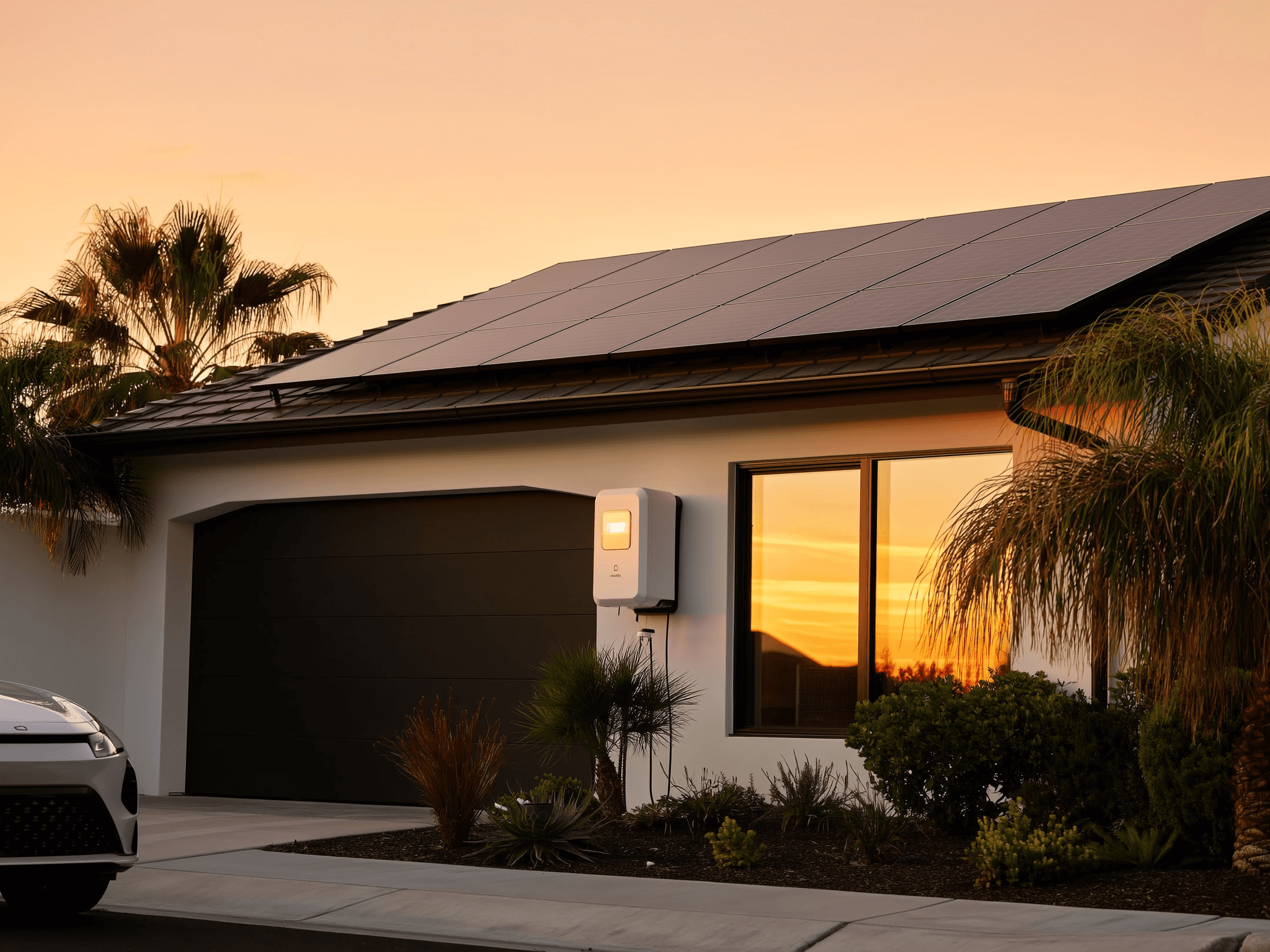
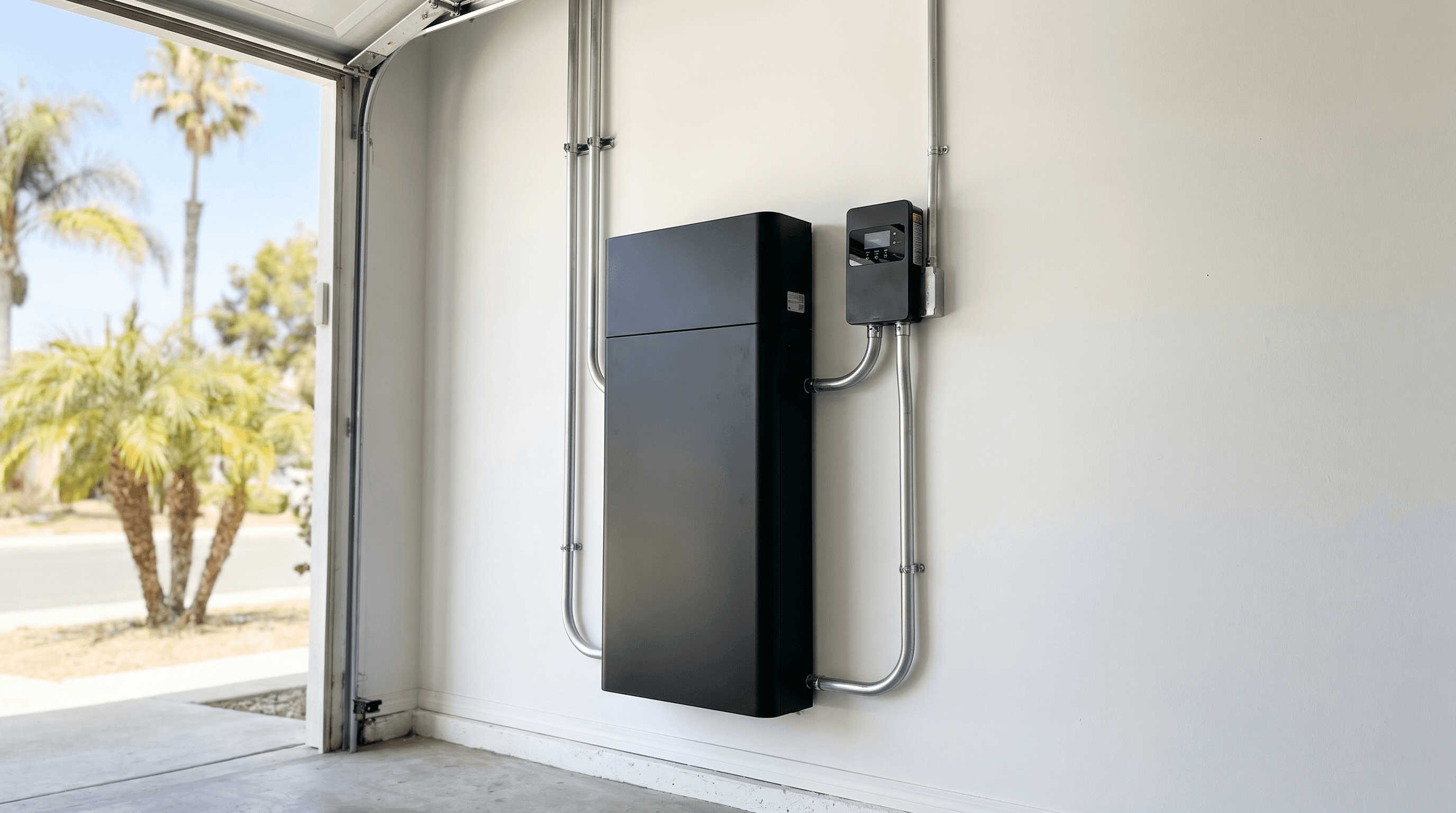
From our own installations: the aPower 2 most commonly goes outdoors on an exterior wall, on a protected patio or carport wall, or in an unattached garage. Attached-garage installations require specific clearances from the interconnecting door and any fuel-burning equipment that we assess on a site-by-site basis. The aGate's 280-amp busbar handles interconnection without a main panel upgrade in most standard California homes — our installations in older Eagle Rock homes with 150-amp panels have proceeded without panel replacement. Utility interconnection (Rule 21 application to SCE, LADWP, or BWP) typically adds three to eight weeks to the project timeline. Anca Solar handles the Rule 21 application, utility approval, and city permit submission as part of every installation.
What this means for SoCal homeowners
The Franklin WH aPower 2 is, in our assessment, the most capable single-unit whole-home battery available for Southern California residential installations in 2026. The 15 kWh capacity, 10 kW continuous output, 15-year warranty, and LFP chemistry make a coherent package for the specific conditions of this market: hot summers, fire-season outages, TOU rates that reward evening discharge, and a Net Billing Tariff that has already driven 70% of new solar customers toward battery pairing. The aGate's automation handles the optimization that captures that value without requiring active management from the homeowner.
The honest limitations are these: the federal ITC is gone, so your incentive stack is SGIP and utility rebates — both of which are meaningful but require verification of availability before they go into your financial model. SGIP is waitlisted or closed in some territories as of May 2026. The installed cost of approximately $17,655 before incentives ($1,177/kWh per EnergySage's marketplace average) is the entry point — your actual quote from Anca Solar will reflect your specific site, installation complexity, and any applicable utility interconnection requirements. If your home is in Burbank and you are a BWP customer, the potential $530/kWh rebate (if confirmed eligible) changes the economics substantially — verify with BWP before installation.
For homeowners with an existing solar system who are now evaluating battery storage, the aPower 2 adds to non-Enphase systems cleanly via the aGate. For homeowners planning a new combined solar and battery installation across Los Angeles, Orange, and Ventura Counties, we design the system together from the start — solar array, aPower 2 sizing, and aGate configuration — so the economics are right from day one, not retrofitted later. Learn more about how Anca Solar approaches each installation. Schedule a free solar consultation with Anca Solar — we serve homes throughout the LA Basin, Orange County, and Ventura County. (CSLB License #873768, 4519 Westdale Ave, Eagle Rock, CA 90041.)
Subscribe to our newsletter
Sign up to get the most recent blog articles in your email every week.