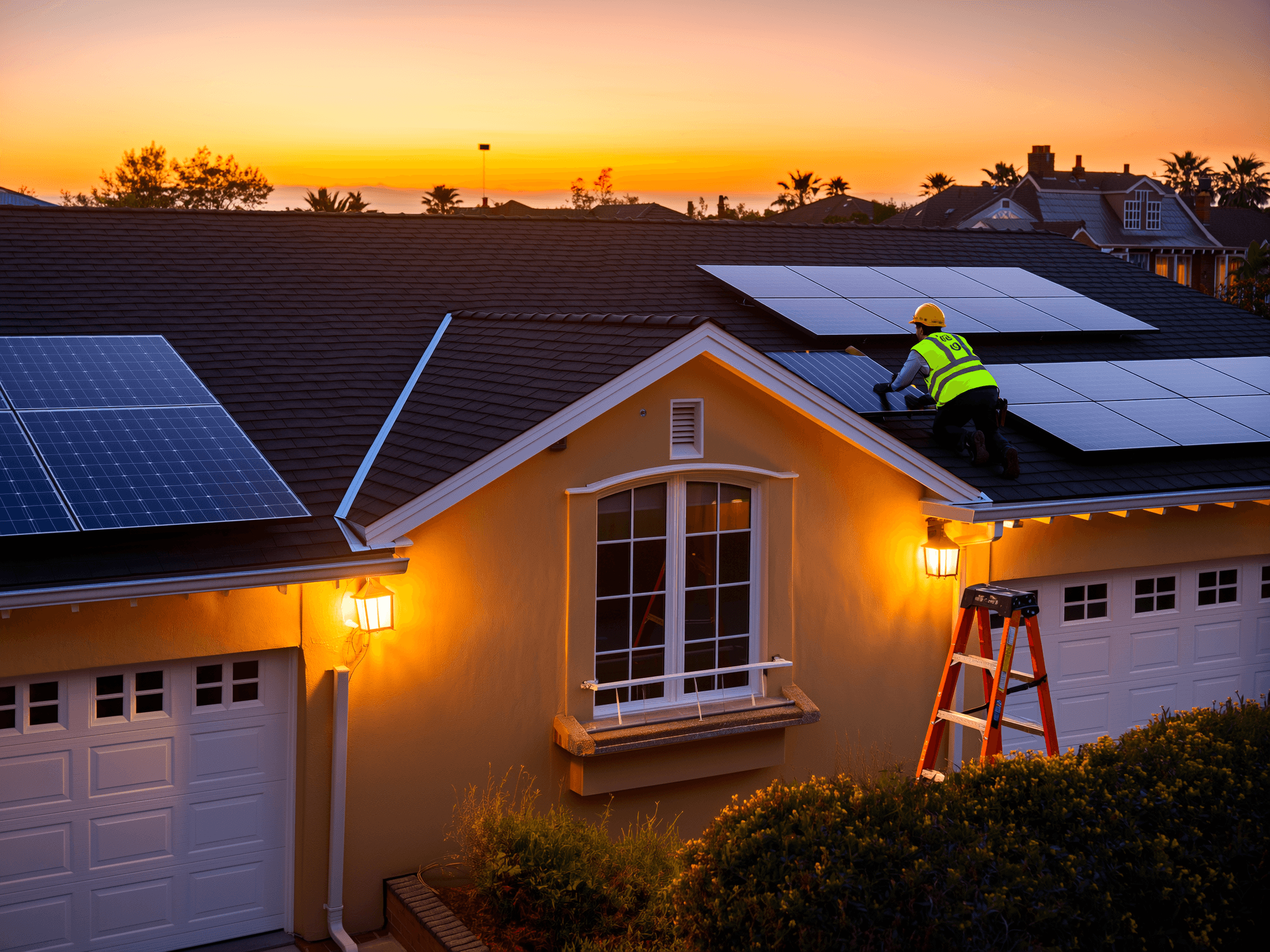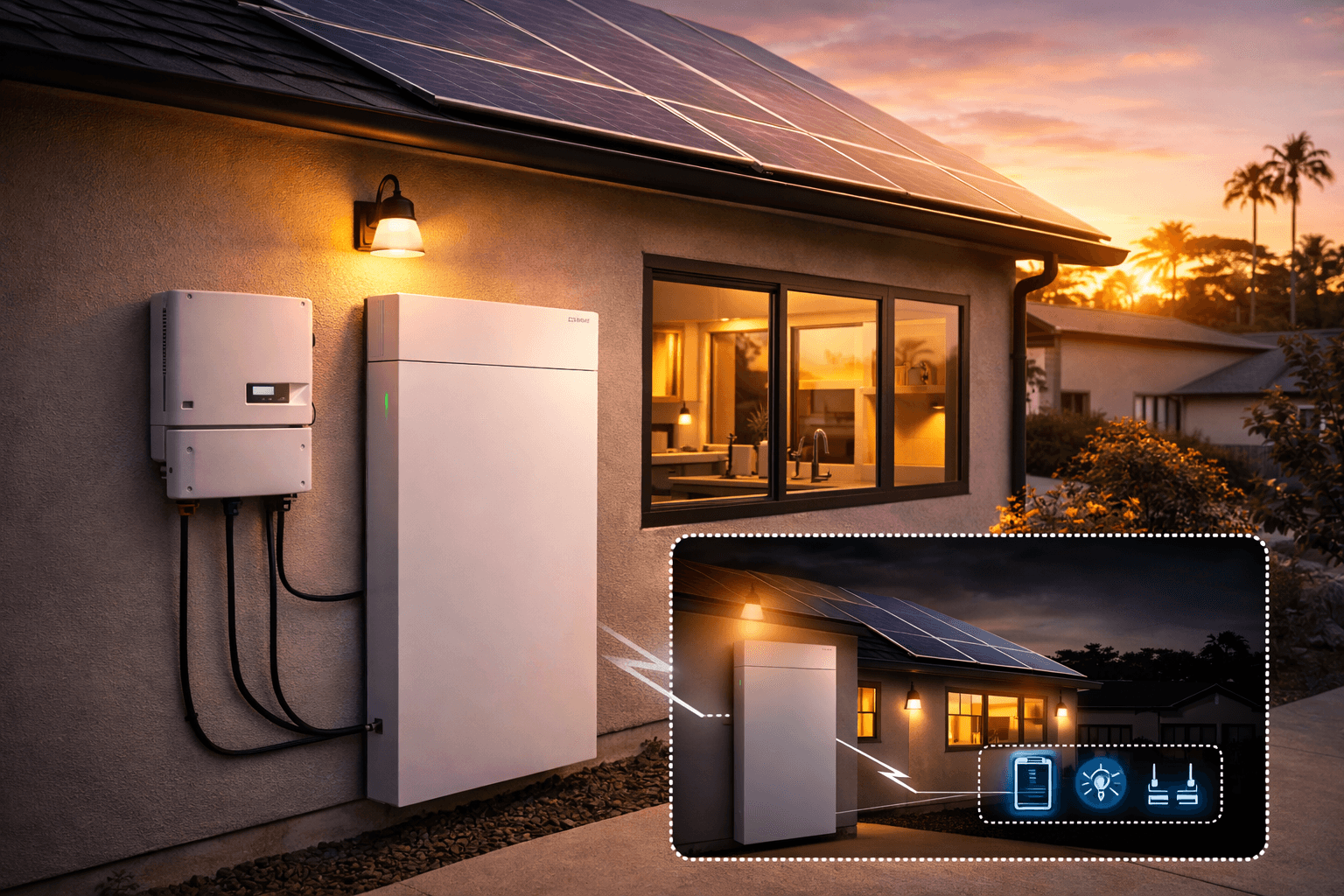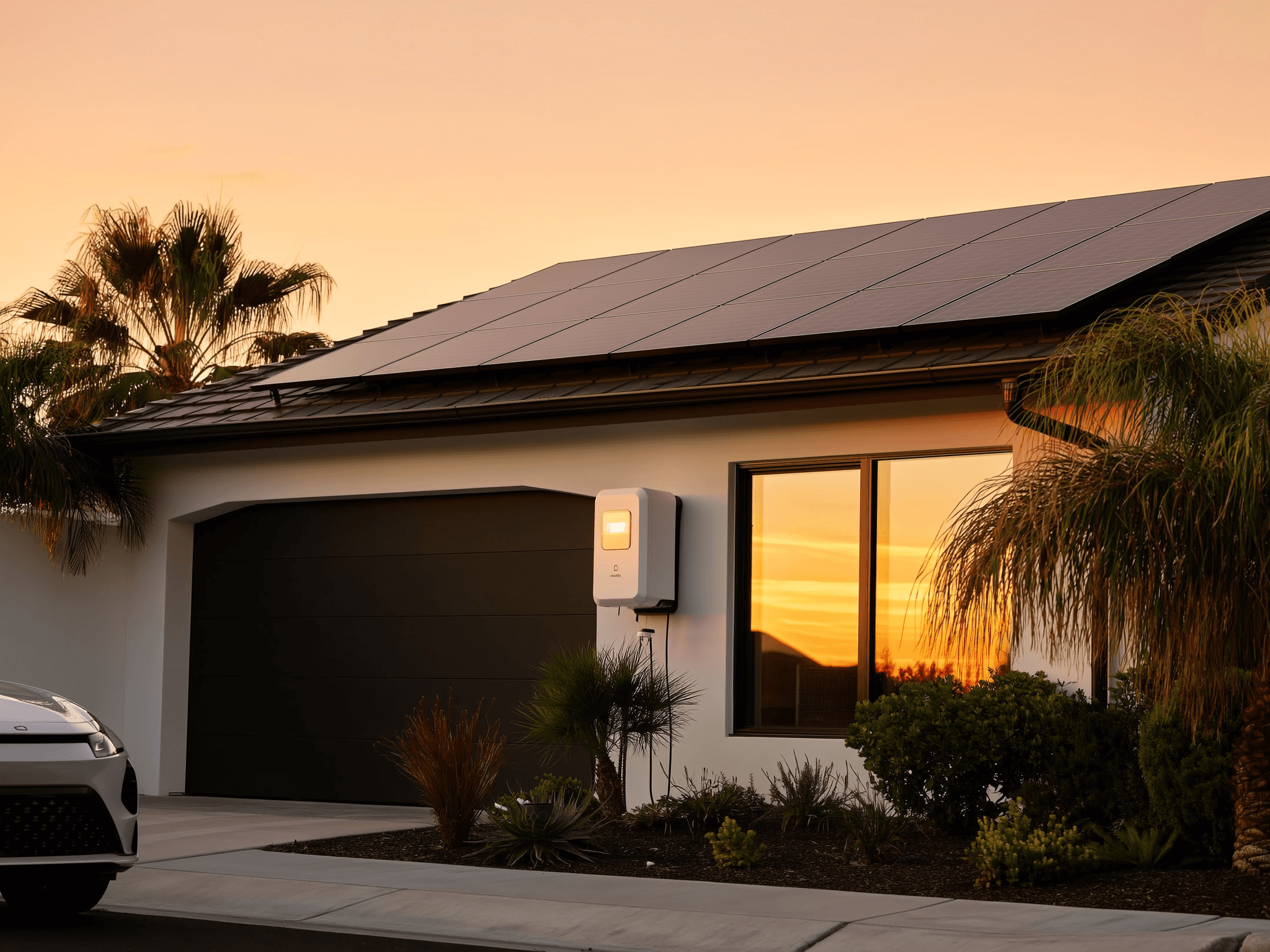
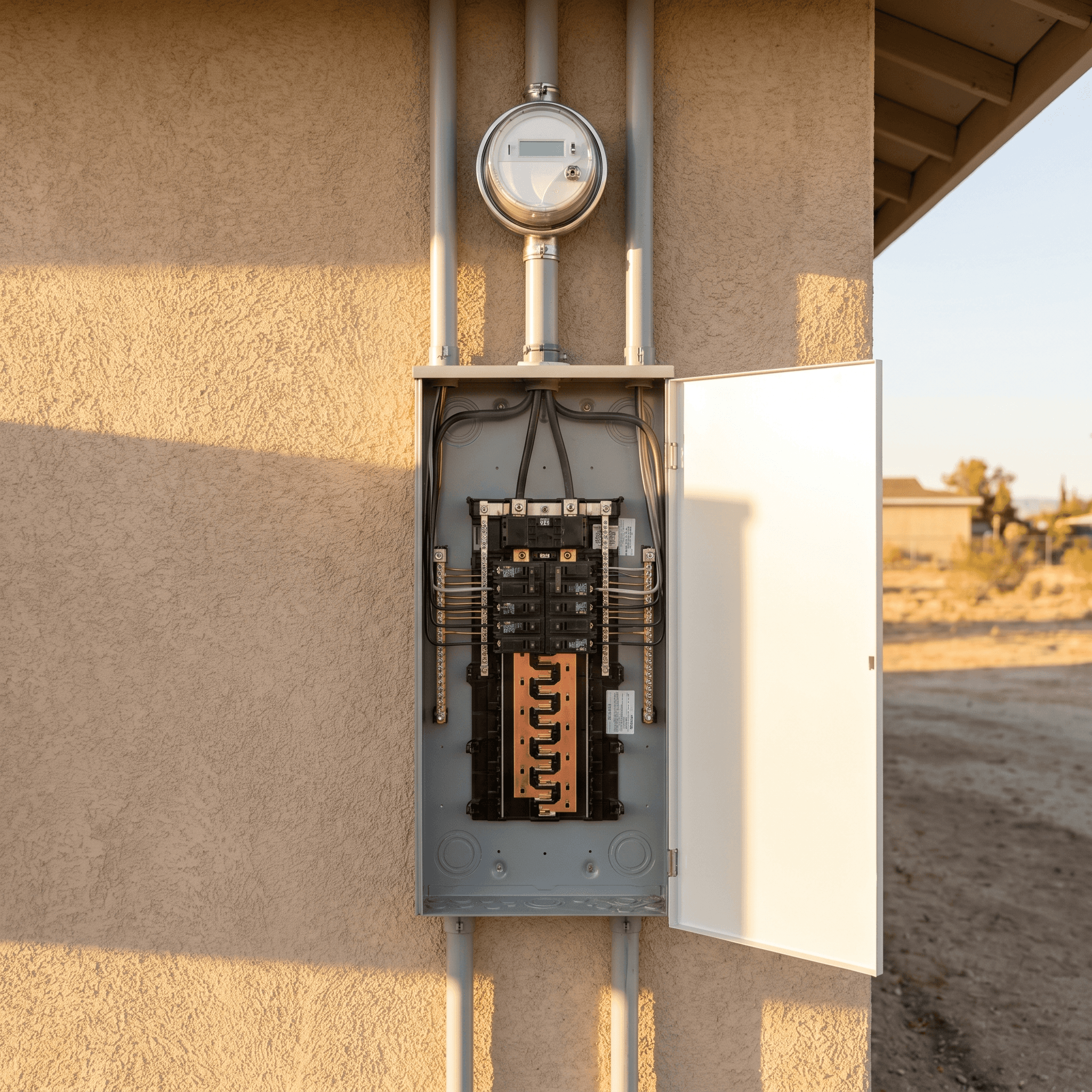
If you've gotten a solar quote recently and noticed a line item for a "main panel upgrade" — or if an installer told you that you'll need one before they can move forward — you're not alone. This is one of the most common questions we field at Anca Solar, and it's one where a little technical understanding goes a long way toward making a smart decision. The short answer is that whether you need an upgrade depends on straightforward math, not guesswork, and in many California homes there are ways to avoid one entirely.
California's combination of older 100A-service housing stock, rapid EV adoption, and surging interest in battery storage has pushed panel upgrades from an occasional footnote to a regular part of the solar conversation. This guide walks you through the code behind the decision, the four most common scenarios where an upgrade is genuinely required, the options available if you want to avoid one, and what to expect from California's permitting and utility interconnection process in 2026.
When solar actually requires a main panel upgrade in California
Every solar connection to a residential electrical panel in California is governed by a formula in NEC Section 705.12 — the part of the National Electrical Code that controls how solar systems connect to existing service. The rule that matters most is commonly called the "120% rule," and understanding it takes less than five minutes.
The NEC 705.12 120% rule — the math that drives the decision
Your electrical panel has two key ratings: a main breaker rating (typically 100A, 150A, or 200A) and a busbar rating (the copper bar all your circuit breakers connect to, usually rated the same as or slightly higher than your main breaker). NEC Section 705.12 sets a ceiling on how much total breaker amperage your panel can carry when solar is added: the combined rating of your main breaker plus your solar back-fed breaker cannot exceed 120% of the busbar rating.
The formula works like this:
Maximum solar back-fed breaker = (Busbar rating × 1.20) − Main breaker rating
Here is what that looks like across the three most common panel sizes in Southern California:
Panel Size | Busbar × 1.20 | Main Breaker | Max Solar Breaker | Approx. Max Solar Output |
|---|---|---|---|---|
100A | 120A | 100A | 20A | ~4.8 kW |
150A | 180A | 150A | 30A | ~7.2 kW |
200A | 240A | 200A | 40A | ~9.6 kW |
Keep in mind that median residential solar system size in the U.S. was 11.8 kW as of H2 2025, per EnergySage's marketplace data covered by PV Magazine USA. A standard 200A panel can accommodate roughly 9.6 kW under the 120% rule — which means even a 200A service can be a tight fit for larger California homes. A 100A panel tops out around 4.8 kW, which is well below what most homeowners want to install today.
The four scenarios where an upgrade is hard to avoid
Not every home with a 100A panel needs an upgrade, and not every 200A panel has room for a large system. The actual determination depends on your panel's condition, your system size, and what else you're adding to your electrical service. That said, there are four situations where a panel upgrade is almost always the right call:
Scenario 1 — Older home with 100A service and a solar system larger than ~5 kW. A standard 100A panel leaves only 20A of headroom for a solar back-fed breaker under the NEC formula. At 240V, that's roughly 4.8 kW — not enough to meaningfully offset the electricity bills of most California homes, especially at today's utility rates. In our experience, the bulk of California homes still on 100A service were built in the era when 100A was the standard residential supply, and the solar system size that makes economic sense for those homes typically exceeds what the panel can support.
Scenario 2 — You are stacking solar, a battery, and an EV charger at the same time. Each addition carries its own dedicated circuit. A Level 2 EV charger typically requires a 40–60A dedicated circuit. A battery storage system requires its own breaker as well. Combined with the solar back-fed breaker, you can quickly exhaust a 200A panel's 120% headroom. This "load stacking" scenario is increasingly common in California, where battery attachment rates remain high — falling from 79% to 71% in H2 2025 but still the highest of any state in the country, per PV Magazine USA. If you plan to add EV charger installation and solar battery storage alongside your solar system, your installer needs to run the complete load calculation before drawing any conclusions about your panel.
Scenario 3 — Your existing panel has safety issues that are separate from the solar question. Some older panels have conditions that warrant replacement regardless of solar: double-tapped breakers, aluminum branch circuit wiring, outdated fuse boxes, or manufacturers with documented reliability histories. When a panel already has safety concerns, bundling the upgrade with a solar installation is practical — the work is happening anyway, and it resolves both issues in a single permit and inspection.
Scenario 4 — Your panel simply does not have physical space for additional breakers. Even if the amperage math technically works, some panels have no available breaker slots. Tandem breakers can solve this in some cases, but an overcrowded panel is often a signal that the equipment has reached the end of its useful service life.
"Whether you need a panel upgrade is a math question, not a sales question. We run the numbers on every site assessment before we discuss system sizing — it is the only way to give you an honest answer."
Why panel upgrades are becoming more common — and what is driving the surge
Even five years ago, a main panel upgrade was an occasional add-on for a small fraction of solar installs. Today it comes up regularly at Anca Solar assessments. That shift is not accidental — it reflects three structural changes in how California homeowners are approaching electrification.
The electrification stack: EV chargers, heat pumps, and batteries all arriving at once
California homeowners are not just adding solar. They are adding solar, then an EV charger, then a heat pump to replace their gas furnace, then a battery for backup power. Each of these appliances represents a significant electrical load — and each load typically requires its own dedicated circuit. When you add them one at a time over two or three years, the panel that seemed adequate for solar alone can run out of room by the time the third installation arrives.
The California Energy Commission has been pushing this direction for years. dcbel — a bi-directional EV charging company — received its CEC REDWDS award in early 2024, with deployments reaching roughly 200 California homes by May 2026, per PV Magazine USA. The program reflects the state's expectation that the average California home will eventually operate as a fully electrified energy hub — a vision that puts real strain on a 1970s-era 100A panel.
Deep Patel, founder and CEO of Gigawatt Inc., described the shift plainly in a May 2026 piece in PV Magazine USA: homeowners now view solar as "core infrastructure — similar to roofing or HVAC — rather than a discretionary purchase." When solar is infrastructure, the panel that supports it gets the same scrutiny as the roof structure itself.
The post-ITC rush and its aftermath
The One Big Beautiful Bill Act (OBBBA), signed July 4, 2025, eliminated the 30% federal residential solar tax credit for systems installed after December 31, 2025. That deadline created an extraordinary surge: EnergySage's marketplace data reported a 205% increase in homeowner engagement in H2 2025, and most installers filled their annual capacity by October 2025, per PV Magazine USA.
The rush had consequences. Installers prioritized simpler, faster projects — solar-only systems with no battery, no panel upgrade. Homeowners who deferred battery storage or panel work to meet the tax credit deadline are now circling back to complete their systems in 2026, without the federal credit. That is creating a second wave of panel upgrade conversations among homeowners who thought they were done.
If you are in that situation — solar already installed, now adding a battery or EV charger — your solar installation team needs to assess your panel's remaining headroom before any additional work begins. Adding a battery circuit to a panel that already has a solar back-fed breaker and limited amperage is exactly the scenario that triggers a code requirement.
Ways to avoid an unnecessary panel upgrade
Here is something the industry does not always explain clearly: a panel upgrade is not the only solution when the 120% rule math comes up short. There are four legitimate alternatives that a licensed electrician should evaluate before recommending a full service upgrade. Not all of them work for every home, but each one has real-world applications in California.
Supply-side connection — the option many installers overlook
NEC Section 705.12 also permits a supply-side connection, sometimes called a line-side tap. Instead of connecting the solar system to a breaker inside the main panel, the inverter connects to the utility side of the main disconnect — before the main breaker. When solar is connected this way, the 120% rule does not apply, and larger systems can be accommodated without upgrading the panel itself.
This is not a workaround or a loophole. It is explicitly permitted by the same NEC section that defines the 120% rule. In practice, it requires adequate physical space at the service entrance and a meter socket or disconnect rated for the application, and it must be reviewed and approved by your local jurisdiction and utility. Not every home is physically configured for it. But for homes where it is feasible, it can eliminate the need for a panel upgrade entirely — which means eliminating the cost, the additional permit, and the additional inspection that come with a full service upgrade.
When we conduct a site assessment at Anca Solar, evaluating supply-side connection feasibility is part of the standard process. If your current installer has not raised it as an option, it is worth asking directly.
Smart panels, sub-panels, and load management devices
Three other tools can reduce or eliminate the need for a full main panel upgrade, depending on your home's specific situation:
Smart panels (such as SPAN): A smart panel replaces your main panel and actively manages load in real time — shedding non-critical circuits during peak demand so your electrical service can handle more without a utility upgrade. SPAN's own data, cited in Solar Power World, shows the product can save home builders $3,000–$10,000 per site by avoiding the cost of a 400A utility service upgrade. For retrofits on existing homes, the calculus is different — the smart panel itself has an installation cost — but for homeowners who are planning multiple electrification additions over several years, it can be a cost-effective foundation.
Sub-panel installation: In some cases, offloading specific high-draw circuits (such as an EV charger) to a dedicated sub-panel can reduce the amperage burden on the main panel enough to stay within the 120% ceiling. This approach works best when the main panel is a 200A service with moderate existing load and limited physical breaker space.
Load management devices: These devices — installed between the solar inverter and the panel — automatically limit inverter output when total household demand would otherwise exceed safe levels. They do not increase your panel's capacity, but they can make a solar system feasible within existing capacity by preventing the system from ever pushing the panel past its limit. They are typically less expensive than a full panel upgrade and can be combined with other strategies.
The right tool depends on your current panel size, your planned system size, what other electrical loads you are adding, and your long-term electrification goals. The honest answer is that you need a load calculation from a licensed electrician — not a ballpark estimate — before committing to any of these approaches. A proper load calculation accounts for your actual measured demand, not just the rated amperage of your installed appliances.
"A main panel upgrade is sometimes the right answer. But it should follow an actual load calculation, not just a quick look at your panel's nameplate rating."
Permitting, interconnection, and what to expect in California in 2026
Even once you have resolved the panel upgrade question, California solar projects face a separate layer of complexity: the permit and utility interconnection process. Understanding both before you sign a contract helps you set realistic expectations and avoid surprises.
The permitting reality: $6,000–$7,000 in added costs, and California still earns a B
A March 2026 report covered by Solar Power World found that bureaucratic barriers in residential solar permitting add $6,000–$7,000 to the cost of a typical solar project. California and Texas were the only states in the country to earn a B grade on the Solar Permitting Scorecard — no state earned an A. This is worth understanding in context: California's permitting environment is genuinely better than most of the country, but "better than most" still means meaningful added cost and timeline.
A main panel upgrade, when required, adds its own permit to the project — separate from the solar permit in many jurisdictions. Both permits require inspections, and the panel upgrade inspection typically must be completed and closed before the utility will process the interconnection application. In practice, this means a panel upgrade does not just add cost — it adds sequential steps that extend your project timeline. For a deeper look at how the permit and interconnection process works in Los Angeles specifically, see our solar permitting guide for Los Angeles.
SCE Rule 21 interconnection delays: the real-world timeline in 2026
If your home is served by Southern California Edison (as most homes in the San Gabriel Valley, including Eagle Rock and the surrounding areas, are), your solar system connects to the grid through SCE's Rule 21 interconnection process. Rule 21 is the CPUC tariff rule that sets mandated timelines for each step of the interconnection review. The challenge in 2026 is that SCE has been routinely missing those deadlines.
The California Public Utilities Commission's own quarterly data, reported by Solar Power World in November 2025, shows that SCE and PG&E met mandated interconnection timelines for as low as 27% to 45% of projects across three key review steps. Three other steps had compliance rates between 53% and 81%. The required standard is 95%. In August 2025, CALSSA — the California Solar and Storage Association — filed a complaint seeking $10 million in fines against PG&E and SCE for routinely ignoring those timelines. In November 2025, 18 California legislators submitted a formal letter to the CPUC demanding enforcement action.
What does this mean for your project timeline? It means that even after installation is complete, your system cannot export power until SCE grants Permission to Operate (PTO). That process can take weeks — or, in documented cases, months. If your project requires a main panel upgrade, the upgrade inspection must close first, which adds additional lead time before SCE even begins their review. When you budget your project, plan for the gap between installation completion and PTO. During that window, your system sits on your roof but your utility meter keeps running. To understand how your bill credits change once PTO is granted, see our overview of SCE time-of-use rates and solar in 2026.
Kevin Luo, CALSSA's policy manager, described the enforcement gap plainly in PV Magazine USA: "There are clear rules on how long the utilities can take for their review, but there has been zero enforcement of those rules." That is starting to change — the legislative attention and the CALSSA complaint are the most significant enforcement pressure Rule 21 has faced in years — but for homeowners planning a 2026 installation, the delays are still a real factor.
Title 24 electric-readiness and what it means if your home was built after 2023
If your home was built or substantially remodeled after January 1, 2023, California's 2022 Building Energy Efficiency Standards (Title 24, Part 6) apply. The California Energy Commission confirms these standards "establish electric-ready requirements for new homes" — meaning your home should already have the conduit, wiring, and panel capacity to support EV charging and future electrification without a service upgrade. The 2025 Energy Code, which builds on the 2022 standards, continues the push toward "electric-readiness encouragement" and heat pump integration.
In practical terms: if your home was built after early 2023, the likelihood of needing a panel upgrade for solar alone is lower than for older housing stock with 100A service. If you are adding solar plus a battery plus an EV charger to a newer home, you are more likely to have the panel capacity to accommodate it. That said, "electric-ready" under Title 24 does not guarantee unlimited capacity — a load calculation is still the right first step before any system is sized.
What this means for you
The main panel upgrade question has a straightforward answer when someone runs the actual numbers on your home. The NEC 705.12 formula is not complicated — it is arithmetic based on your panel's busbar rating, your main breaker, and your planned system size. What makes it complicated is when homeowners receive conflicting information, or when an installer recommends an upgrade without running a full load calculation first, or when the upgrade is presented as the only option when supply-side connections and load management devices exist.
A few practical takeaways for 2026 California homeowners:
Get a load calculation, not just a panel assessment. Your panel's nameplate rating does not tell the whole story. A licensed electrician needs to calculate your actual measured load — especially if you have recently added an EV charger, heat pump, or other high-draw appliance — before any conclusions about panel capacity are reliable.
Ask about supply-side connection feasibility. Before agreeing to a full panel upgrade, ask your installer whether a supply-side connection is technically feasible for your home. If they cannot give you a clear answer, that is a signal to ask again or get a second opinion.
Factor the SCE interconnection timeline into your planning. If you are on SCE service, budget at least four to twelve weeks between installation completion and Permission to Operate. Projects requiring panel upgrades add additional sequential steps before SCE begins their review. Plan accordingly — especially if you have loan payments tied to a specific activation date.
Panel upgrade costs vary — get a line-item quote. We cannot responsibly give you a cost range for a 100A to 200A service upgrade without knowing your home's configuration, local labor rates, permit fees, and whether any utility-side work is involved. The cost varies meaningfully depending on all of those factors. Any installer who gives you a precise number without having seen your home and pulled your permit history is estimating. Insist on a site-specific quote.
The federal 30% residential solar tax credit is no longer available. The One Big Beautiful Bill Act eliminated it for systems installed after December 31, 2025. California state programs — including SGIP for battery storage and the Net Billing Tariff through SCE — are still active. Consult a tax professional regarding your specific situation; this is not tax advice.
If you are weighing solar for your home and want a clear answer on whether your panel can support the system size you need — and what the realistic options are if it cannot — schedule a free site assessment with Anca Solar. We serve homes across Los Angeles, Orange, and Ventura Counties. Our licensed electricians run the NEC 705.12 math on every project before system sizing begins, and we will tell you honestly whether a panel upgrade is required, whether a supply-side connection is an option, and what the full-project timeline looks like for your address. Anca Solar, 4519 Westdale Ave, Eagle Rock, CA 90041. CSLB License #873768.
Subscribe to our newsletter
Sign up to get the most recent blog articles in your email every week.